
Finding great workout clothes when you're a bigger guy used to be a real headache. Thankfully, the market has finally started to pay attention. The secret isn't just about finding larger sizes; it's about zeroing in on high-performance fabrics, cuts that actually let you move, and getting the sizing right for genuine comfort. Let's break down how to find gear that helps you perform better and feel great doing it.
The Fitness Revolution Is for Every Body
You can't give your all in a workout if you're constantly fussing with your clothes. For far too long, bigger guys were stuck with terrible choices—either clothes that were comically baggy and got in the way, or stuff so tight it felt like a straightjacket.
That era is officially over. Brands are finally realizing that athletes come in all shapes and sizes, and your gear needs to be able to keep up with you.
Think of this as your inside scoop, cutting through all the marketing fluff to get to what actually works for a larger frame. We’re going to tackle the common problems head-on: overheating, chafing, and gear that restricts your movement. This is about more than just what you wear; it's about getting rid of the distractions so you can focus on hitting your goals.
Why Quality Gear Matters More Than Ever
The demand for genuinely good athletic wear has exploded. In fact, the men's side of the global workout clothes market was the biggest chunk in 2023, largely because guys are looking for durable, functional apparel that actually performs. This means moisture-wicking shirts and performance shorts built for the demands of bigger, stronger athletes. You can read more about the workout clothes market to see where things are headed.
This big shift means more brands are finally putting real thought into designing big men workout clothes. The payoff is huge:
- Better Performance: When your clothes fit properly, you can sink deeper into a squat or stretch further without fabric pulling you back. It’s all about unrestricted movement.
- Real Comfort: Breathable materials are a game-changer for staying cool. Plus, smart seam placement can completely eliminate painful chafing and skin irritation.
- A Huge Confidence Boost: Let's be honest, when you look good and feel good in your gear, you're that much more motivated to get out there and crush it.
- Versatile Style: Today’s best activewear is designed to look just as good on the street as it does in the gym. For more on this, check out our guide on the best athleisure for men.
Choosing Fabrics That Work as Hard as You Do
When you're building a solid collection of big men workout clothes, the fabric is everything. Seriously. Think of it as the foundation of your gear. The right material can make or break your workout, dictating your comfort, performance, and even your confidence from the first rep to the last.
Picking the wrong fabric, like a standard cotton tee, is like trying to run a race in a pair of heavy work boots. It just works against you, getting soaked with sweat, feeling heavy, and clinging in all the wrong places.
Performance fabrics, on the other hand, are engineered to be your ally. They’re your first line of defense against overheating, chafing, and feeling restricted, letting you focus on what really matters: your workout.
The Science of Staying Cool and Dry
The single most important thing to look for is moisture-wicking technology. Picture your shirt acting like a smart sponge, pulling sweat off your skin and pushing it to the fabric's surface so it can evaporate in a flash. For bigger guys who naturally generate more heat, this isn't just a nice-to-have; it's essential.
This is where materials like polyester and nylon really shine. They actively work to keep you dry and light, which is a night-and-day difference from cotton that just absorbs moisture and hangs on you. Less sweat means less chafing and irritation, so you can think about your form instead of your uncomfortable shirt.
The right gear is more than just clothing; it's a tool that removes distractions. When you're not fighting with a sweat-soaked shirt or restrictive fabric, you can channel all your energy into performance.
Breathability and Stretch: The Ultimate Combination
Next up is breathability. Keep an eye out for clothes with built-in ventilation, like mesh panels strategically placed under the arms or down the back. These act like exhaust ports, letting hot air escape and cool air circulate, which stops you from feeling trapped and overheated mid-session.
Just as crucial is stretch. Fabrics that include a bit of spandex or elastane give you that fantastic four-way stretch that moves with you, not against you. For a bigger frame, this is non-negotiable. It means your shirt won’t feel like a straightjacket across your chest and shoulders during a bench press, and your shorts won’t hold you back when you’re going deep on a squat. That freedom of movement is key for both safety and getting the most out of every exercise.
This concept map breaks down how the right gear builds on these principles.
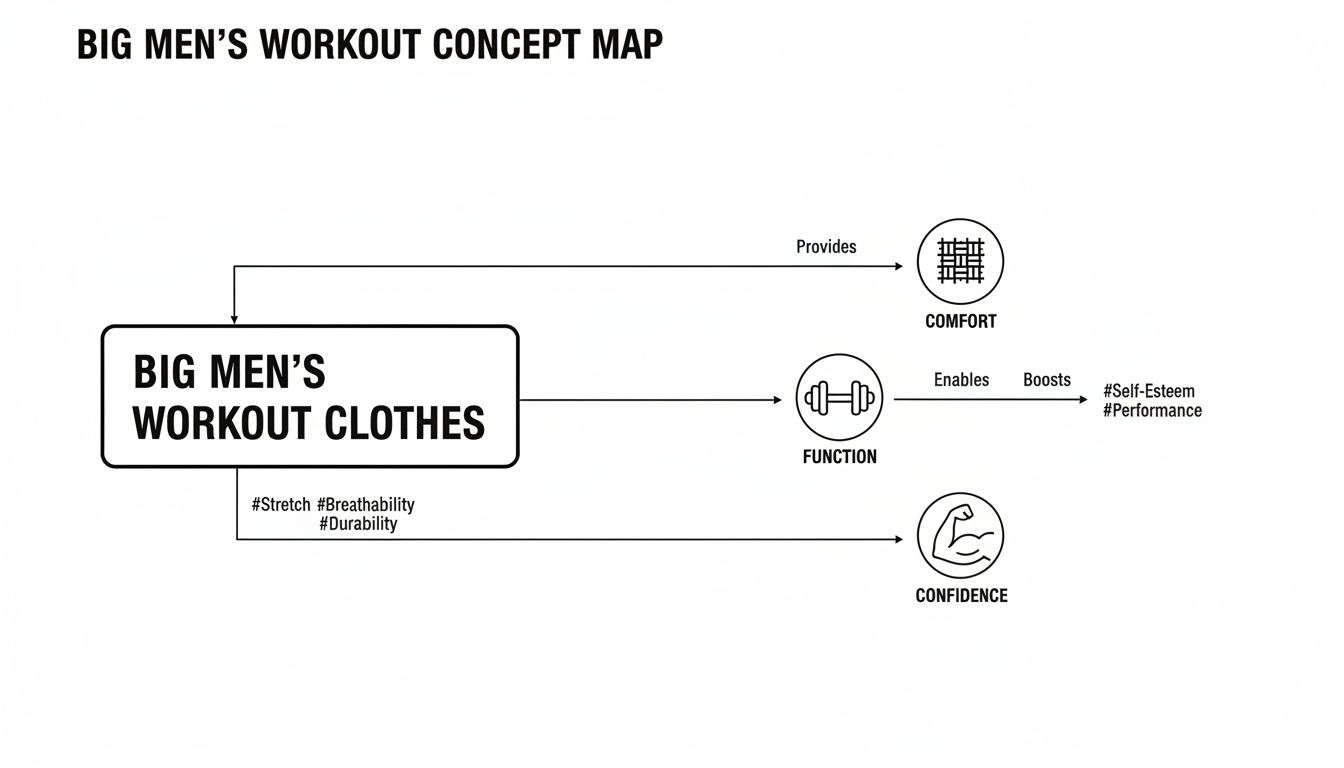
As you can see, it all starts with the right materials. They're the cornerstone of comfort, which unlocks better function and, ultimately, more confidence in the gym.
A Closer Look at Performance Fabrics
To help you navigate the options, let's break down some of the most common materials you'll find in high-quality activewear. Each has its own strengths, so knowing what to look for can make a huge difference.
Performance Fabric Comparison for Big Men's Activewear
| Fabric Type | Primary Benefit | Best For | Things to Consider |
|---|---|---|---|
| Polyester | Moisture-wicking & durable | High-intensity workouts, cardio, weightlifting | Can sometimes retain odors; look for anti-odor tech |
| Nylon | Lightweight & stretchy | Running, cycling, any activity needing max flexibility | Can be less breathable than other synthetics |
| Spandex/Elastane | Superior stretch & recovery | Anything requiring a full range of motion | Almost always blended with other fabrics, not used alone |
| Merino Wool | Temperature regulating & odor-resistant | Outdoor workouts, hiking, cool-weather training | Tends to be more expensive than synthetic options |
| Cotton Blends | Soft comfort | Low-impact activities, cool-downs, lifestyle wear | Avoid 100% cotton for intense sessions due to sweat absorption |
Choosing the right fabric often comes down to the type of workout you're doing. A polyester/spandex blend is a fantastic all-rounder for the gym, while merino wool might be your go-to for an early morning run.
Durability for Long-Term Performance
Finally, let’s talk about durability. Good workout gear is an investment, and it needs to hold up to tough sessions and frequent washing without falling apart. A few tell-tale signs of quality construction can make all the difference.
- Reinforced Stitching: Look closely at the seams. You want to see strong, reinforced stitching, especially in high-stress areas like the shoulders and crotch, to prevent them from popping mid-squat.
- Flatlock Seams: These are the gold standard. They lie completely flat against your skin to eliminate chafing and are typically much stronger than traditional raised seams.
- Pill-Resistant Fabric: Nothing makes gear look old faster than pilling—those tiny fuzzballs that appear after washing. Quality fabrics are designed to resist this, keeping your clothes looking sharp for much longer.
When you find gear that ticks all these boxes—moisture-wicking, breathable, stretchy, and durable—you've found a winner. For a deeper dive, our complete guide to men's gym clothes offers more examples. It's about finding apparel that truly performs, so you can, too.
2. Mastering the Fit for Maximum Movement
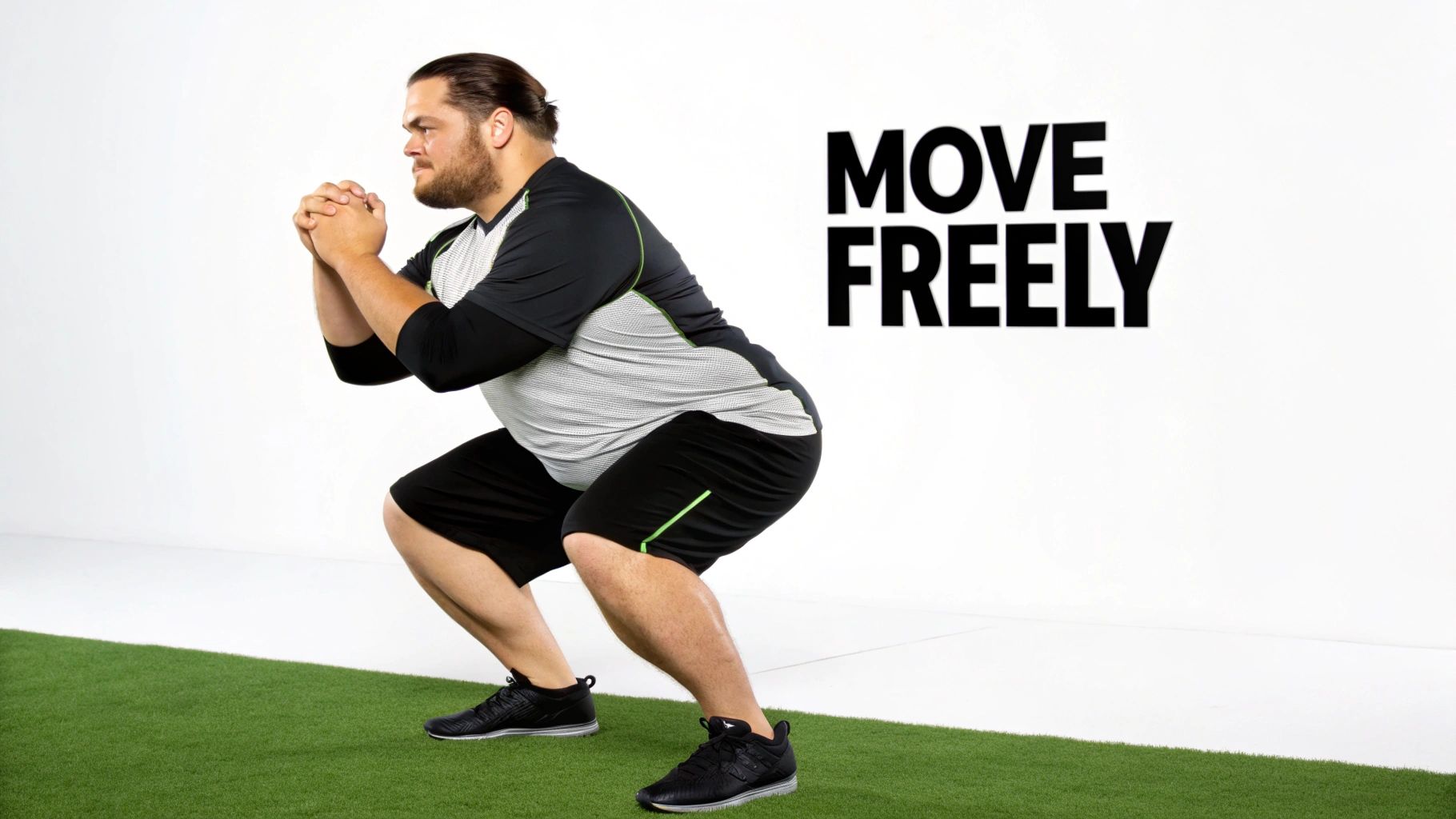
It’s one thing to talk about high-tech fabrics, but if your gear doesn't fit right, none of that matters. The cut and construction of your workout clothes are what will ultimately let you move without restriction. For bigger guys, this goes way beyond just grabbing the largest size off the rack. You need apparel that’s actually built for a larger, more powerful frame.
We've all been there—a shirt that’s tight across the shoulders or shorts that pinch during a deep squat. It's frustrating and turns a good workout into a constant battle with your own clothes. This is why getting to know the different fit styles is so important. The best big men workout clothes are designed to accommodate broader chests and thicker thighs, not just add shapeless fabric all around. The goal is to find something that moves with you, not against you.
Athletic vs. Relaxed Fit: What’s the Real Difference?
You’ll see "athletic fit" and "relaxed fit" thrown around a lot. It’s easy to assume that "relaxed" is the automatic choice for a bigger build, but that's a common misconception.
- Athletic Fit: Think of this as a more sculpted cut. It’s designed to follow the lines of your body without clinging to it. You get a cleaner silhouette that won't feel like you're swimming in fabric, which is great for avoiding snags on gym equipment.
- Relaxed Fit: This is your classic, looser fit with more room all over. It’s definitely comfortable, but if it's too baggy, it can get in the way during more dynamic movements like kettlebell swings or box jumps.
The trick is finding the right balance. A well-designed athletic fit shirt, for example, will give you ample space across the shoulders and chest but won't billow out around your waist.
Your gear should feel like a supportive teammate, not a restrictive opponent. The right fit helps you forget what you’re wearing so you can focus 100% on your form, making every rep powerful and precise.
Smart Design Features That Unlock Full Motion
It’s the little details in construction that really separate good gear from great gear. Look for these specific features—they make a massive difference in how you feel and perform.
- Gusseted Crotch: This is a total game-changer for shorts and pants. It’s a diamond-shaped panel of fabric sewn right where the seams meet. By eliminating that restrictive four-way intersection, it opens up a huge range of motion for squats, lunges, and any kind of mobility work. No more pulling or pinching.
- Raglan Sleeves: You’ll spot these on shirts where the sleeve seam runs diagonally from the underarm to the collarbone. This design gives your shoulders complete freedom, making it ideal for overhead presses, pull-ups, or anything that requires you to reach up.
These thoughtful additions are all about performance. When your clothes are built for movement, you can push yourself without giving your gear a second thought. And with projections showing that over 1 billion people will be exercising regularly by 2025, brands are paying more attention than ever to these performance details. You can find more insights about the gym apparel market and see just how much the industry is growing to meet this demand.
Your Guide to Nailing the Right Size Every Time
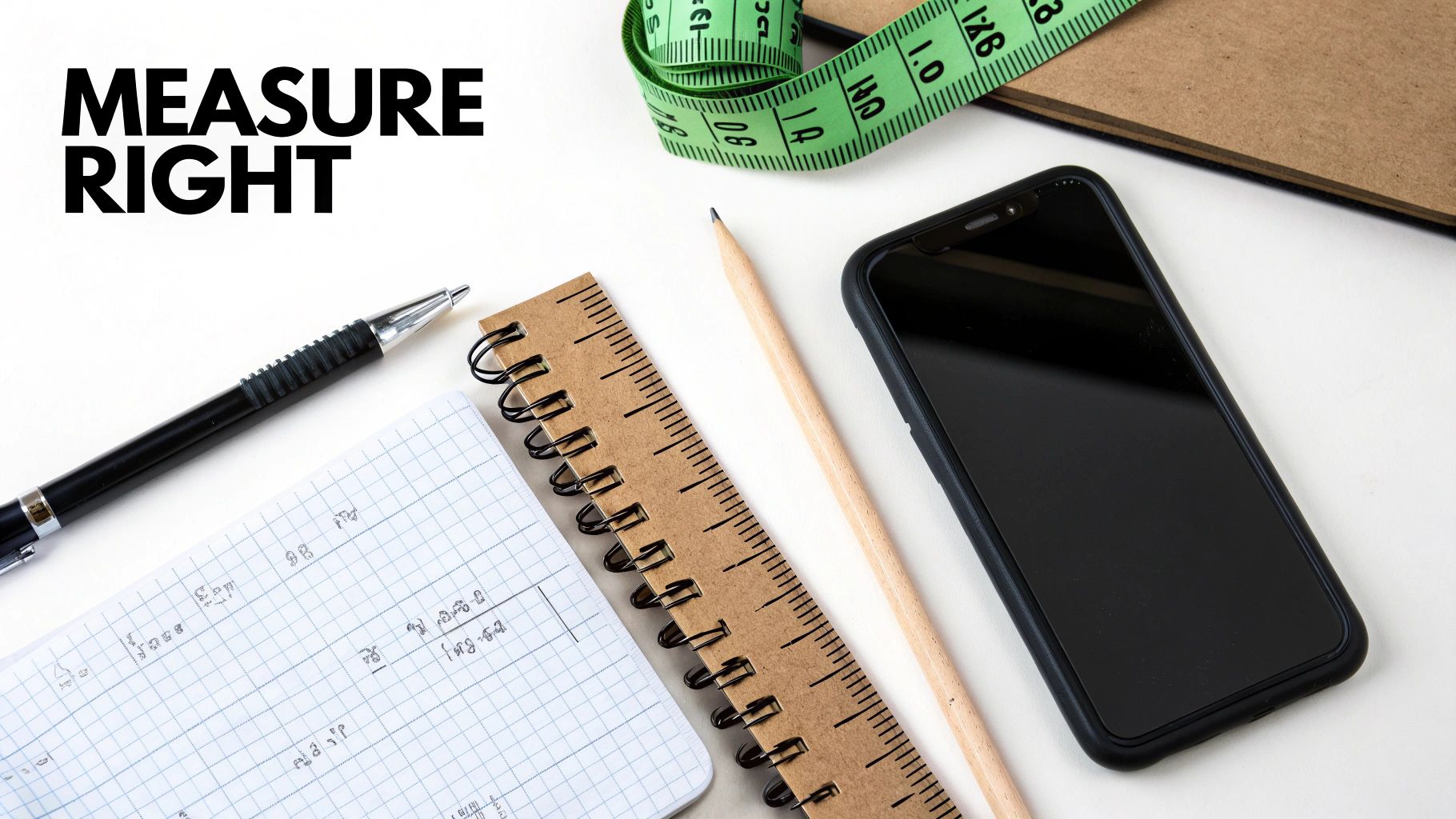
Let's be honest: shopping for big men workout clothes online can feel like a total shot in the dark. Sizes seem to be all over the map, changing wildly from one brand to the next. The best way to cut through that noise? Get familiar with a simple flexible measuring tape.
Knowing your own measurements is the single best way to beat inconsistent sizing charts. Think of it this way: a brand's "XL" is just their opinion, but your measurements are a hard fact. Taking a few minutes to measure yourself properly is the key to avoiding the hassle of returns.
How to Measure for a Perfect Fit
To get started, just grab a soft tape measure and stand in a relaxed, natural position. You'll get the truest numbers by measuring right against your skin or over a thin undershirt.
Here are the four key measurements you’ll need:
- Chest: Run the tape around the fullest part of your chest, keeping it high up under your armpits. Make sure the tape is level all the way around—not dipping in the back. It should be snug, but you should still be able to breathe easily.
- Waist: Find your natural waistline. For most guys, this is right around the belly button. Wrap the tape around that point. If you want to really dial it in, check out our guide on how to measure waist size for pants.
- Hips: With your feet close together, measure around the absolute widest part of your hips and glutes. This measurement is crucial for making sure your shorts and pants don't pull or restrict you during squats and lunges.
- Inseam: This one’s a little tricky to do on your own, so grab a friend if you can. Measure from the very top of your inner thigh straight down to your ankle bone. This tells you exactly how long a pair of pants or shorts will be.
Pro Tip: Try measuring yourself right after a workout when you've got a bit of a pump. This gives you a better sense of how gear will fit when you're actually moving, preventing that "too tight" feeling mid-set.
Once you have these numbers written down, you're armed with everything you need to decode any brand's size chart. And don't forget to scroll down to the customer reviews—they're a goldmine of information. Fellow buyers are usually quick to point out if something runs big, small, or fits just right, giving you that extra confidence to click "buy."
Common Shopping Mistakes and How to Avoid Them
Navigating the world of big men workout clothes can feel like a minefield. It's easy to make a few common missteps that leave you with a drawer full of gear that works against you, not for you. By learning what to avoid, you can build a collection of activewear that actually boosts your performance and confidence.
One of the biggest mistakes I see guys make is defaulting to 100% cotton for everything. Cotton is fantastic for a lazy Sunday, but it's a workout's worst enemy. Think of it like a sponge—it soaks up every drop of sweat and just holds onto it. This leaves you feeling heavy and damp, and it's a fast track to painful chafing as the wet fabric clings and rubs.
Overlooking Function for Fashion
It's tempting to grab that cool-looking graphic tee, but style often comes at the expense of performance. If that shirt isn't made from a technical, moisture-wicking fabric with plenty of stretch, it simply wasn't designed for a real workout.
Genuine performance gear has features that matter, like flatlock seams that don't irritate your skin or gusseted crotches that give you room to squat deep. Before you buy, always flip over the tag and look for:
- Blends of polyester, nylon, or spandex
- Phrases like moisture-wicking or sweat-wicking
- Four-way stretch for unrestricted movement
These are the ingredients for gear that can actually keep up with you.
Assuming Baggy is Better
Many bigger guys instinctively grab the largest, baggiest clothes they can find, thinking more fabric equals more comfort. In reality, this usually backfires. All that extra material can easily get snagged on a weight rack or caught in a machine, which is a serious safety risk.
Baggy clothes also hide your form, making it impossible to check your technique in the mirror. You need to see if your back is straight and your knees are tracking correctly.
A great fit gives you room to move without drowning you in fabric. Aim for an athletic or relaxed fit that follows your body's shape, not a tent that hides it.
Finally, don't kill your gear in the laundry. Tossing high-performance fabrics in a hot dryer is a surefire way to destroy the elastic fibers, ruining the stretch and fit forever. Always wash your activewear in cold water and let it air dry. It's a simple step that protects your investment and keeps your gear performing at its best.
Got Questions? We've Got Answers
Even with the best guide, a few questions always pop up when you're on the hunt for the right workout gear. Let's tackle some of the most common ones I hear from guys trying to find great-fitting, high-performance activewear.
How Can I Stop Chafing When I Work Out?
This is a big one. Chafing is the absolute worst, and it all boils down to two things: friction and moisture. The battle plan starts with your fabric choice and getting the fit right.
Your first line of defense is always a moisture-wicking synthetic fabric. Think polyester or nylon blends that have a good dose of spandex. These materials are literally designed to pull sweat off your skin, keeping you dry and cutting down on the rubbing that leads to that painful irritation. This is also why 100% cotton is your enemy in the gym; it just soaks up sweat like a sponge, making the problem a hundred times worse.
Beyond the fabric, look for these game-changers:
- Flatlock Seams: Check the stitching. These seams lay perfectly flat against your skin, so there's no raised edge to dig in and rub you the wrong way.
- Compression Shorts: A pair of compression shorts worn as a base layer can be a lifesaver. They create a smooth, slick barrier in high-friction zones like your inner thighs.
- Anti-Chafing Balm: If you’re gearing up for a really long run or an extra-intense session, don't be afraid to use a specialty balm on problem spots. It adds that extra layer of protection.
Do I Really Need to Buy Expensive Brands?
Honestly? Not always. But when it comes to performance activewear, you often get what you pay for. The higher price tags on gear from established athletic brands usually come with more advanced fabric technology, better construction (like reinforced stitching that won't pop), and designs that are truly engineered for how you move. They also tend to hold their shape and stretch longer, and many include anti-odor treatments that really work.
That said, there are plenty of affordable brands making fantastic stuff these days. My advice is to ignore the brand name at first and just become a label-reader. Focus on the material breakdown and look for the specific features we've talked about. A great piece of gear is great, no matter what logo is on it.
What's the Right Way to Wash My Workout Clothes So They Don't Wear Out?
Taking care of your gear is crucial if you want it to last. The tech in these fabrics needs a little TLC. Always wash your performance apparel in cold water and stick to the gentle cycle. Hot water is the enemy of elasticity; it will absolutely wreck the spandex fibers, causing them to lose their stretch for good.
The Golden Rule of Gym Clothes: Never, ever use fabric softener. It clogs up the tiny pores in moisture-wicking fabrics, effectively ruining their ability to pull sweat away from your skin. Once it's coated, there's no going back.
For the best results, turn everything inside out before you wash it—this protects any logos or special finishes. And if you can, hang your gear to air dry. The high heat of a dryer is probably the single fastest way to kill the elasticity and shorten the life of your investment.
Ready to find activewear that finally fits right and actually performs? At ModaMuse, we specialize in stylish, functional gear designed for movement. Explore our collections and discover the difference quality makes. Shop the latest arrivals at musaicstore.com.
