
The right gear can make or break your workout. We're not just talking about what looks good—we're talking about clothes that act like a second skin, supporting every lift, run, and stretch. If you're still reaching for that old, stretched-out cotton tee from a decade ago, it's time for an upgrade. Modern men's gym clothes are engineered to help you perform better, and this guide will show you exactly what to look for.
Beyond the Old-School Sweatshirt: How Gym Clothes Got Smart
Think back to the classic training montage. What do you see? Heavy, baggy cotton sweats and basic t-shirts. For a long time, that was the standard. But workout gear has come a long way since then, moving from simple, functional clothing to highly sophisticated performance apparel.
This change wasn't just about style. It was driven by real innovation in fabric technology and a much better understanding of what an athlete's body actually needs. Today, the expectation is simple: your clothes should work just as hard as you do, whether you're hitting a new PR at the gym or grabbing a coffee afterward. The goal is no longer just to cover your body, but to actively help it perform at its best by managing heat and allowing you to move freely.
The New Standard: Performance-First Apparel
Gone are the days when any old shirt would do. Athletes and everyday gym-goers now demand specialized gear, and the industry has responded in a huge way. The global active apparel market hit an estimated USD 110.68 billion in 2024, and the men's category alone made up 41.39% of that revenue in 2023. Those numbers tell a story: we value innovation and are ready to invest in quality gear that delivers. For a deeper dive into these trends, check out the market analysis from Grand View Research.
This boom has set a new benchmark for what we should expect from our workout clothes. It boils down to a few key features that separate the good from the great:
- Moisture-Wicking: Fabrics that pull sweat away from your skin to the surface, where it can evaporate. No more feeling weighed down and sticky.
- Breathability: Materials that let air flow freely to keep you from overheating during intense sessions.
- Four-Way Stretch: Textiles designed to move in every direction you do, offering total freedom of movement without pinching or pulling.
- Durability: Tough construction that holds up to grueling workouts and constant washing without losing its shape or function.
The best gym clothes today are your secret weapon. They're built to manage sweat, regulate your temperature, and move with you so seamlessly that you forget you're even wearing them. That lets you put all your focus where it belongs: on your performance.
Getting familiar with these core features is the first step. It’s how you start building a smart workout wardrobe that doesn’t just look good, but actively helps you crush your fitness goals.
What Makes Performance Fabric So Different?
The real leap forward in men's gym clothes isn't just about style—it's about fabric science. If you’ve ever worked out in a standard-issue cotton t-shirt, you know the feeling. It starts out soft, but minutes into your session, it transforms into a heavy, soggy mess that clings to your skin. That’s because cotton is a natural-born sponge; it just soaks up sweat and holds onto it.
Performance fabrics are the complete opposite. Think of them less as cloth and more as a high-tech system designed to work with your body. They're engineered to manage moisture, regulate your temperature, and move exactly how you need them to.
Here’s a simple way to picture it: a cotton tee is like a dam, trapping every drop of sweat until it’s completely waterlogged. Modern synthetics like polyester and nylon act more like an advanced irrigation network. They actively pull sweat away from your skin and disperse it across the fabric’s surface, allowing it to evaporate in a flash. This keeps you feeling dry, light, and focused on your workout, not on your clammy shirt.
This infographic really captures the journey from those old-school cotton basics to the technical, stylish gear we rely on today.

You can see how things have shifted. We've moved from just needing something to cover up in to demanding apparel that actually enhances our performance.
Beyond Sweat: The Importance of Stretch and Breathability
It’s not just about staying dry. Great gym wear needs to move with you, not against you. That’s where four-way stretch comes in. By weaving in fibers like elastane (you might know it as Spandex or Lycra), the fabric can stretch and snap back both vertically and horizontally. This means your gear can handle anything from a deep squat to a full-sprint lunge without ever pulling, restricting you, or worse, tearing.
Breathability is just as crucial. When you're pushing your limits, your body heats up—fast. Breathable fabrics are designed with a more open weave, often with mesh panels strategically placed in high-sweat zones like your back or underarms. This construction lets hot air and moisture escape, helping your body cool itself down naturally and preventing you from overheating mid-session.
The best performance fabrics are intuitive. They work in harmony with your body, anticipating your needs. They wick sweat before it becomes a problem, stretch as you lunge, and breathe to keep you cool when the pressure is on.
This focus on engineered apparel has completely changed the game. Men's gym wear has decisively shifted from a category of basics to one of technical, high-performance gear. While T-shirts still dominate sales, we're seeing huge growth in technical bottoms and versatile athleisure pieces. Why? Because we now expect features like moisture-wicking, stretch, and odor control as standard. This trend is set to skyrocket the performance apparel market to a staggering USD 72.1 billion by 2035, according to recent industry analysis. You can explore more data on the gym apparel market from Future Market Insights to see where things are headed.
Comparing Performance Fabric Features
Not all performance fabrics are created equal. Different materials are engineered for different purposes, so choosing the right one can make a huge impact on your workout. This table breaks down some of the most common options you'll find.
| Fabric Type | Key Features | Best For Workouts | Care Considerations |
|---|---|---|---|
| Polyester | Extremely durable, wrinkle-resistant, moisture-wicking, and quick-drying. Holds color well. | High-intensity training (HIIT), running, weightlifting—basically any sweat-heavy activity. | Machine wash cold. Avoid fabric softener, which can clog the fibers and reduce wicking ability. |
| Nylon | Very strong, lightweight, and smooth. Offers excellent stretch and recovery. Dries quickly. | Activities requiring a wide range of motion, like yoga, Pilates, and dynamic stretching. | Similar to polyester; wash cold and skip the fabric softener. Can be prone to pilling with abrasion. |
| Spandex (Lycra/Elastane) | Provides incredible stretch and shape retention. Often blended with other fibers for flexibility. | Anything requiring a second-skin fit and maximum mobility, like compression wear or cycling shorts. | Gentle cycle with cold water. Avoid high heat in the dryer, which can damage the elastic fibers. |
| Merino Wool | Naturally moisture-wicking, temperature-regulating (cool in heat, warm in cold), and odor-resistant. | Outdoor workouts, hiking, and cold-weather training. Also great for multi-day use without washing. | Can often be machine-washed on a wool or gentle cycle, but always check the label. Lay flat to dry. |
| TENCEL™ Modal/Lyocell | Ultra-soft, breathable, and made from sustainable wood pulp. Excellent moisture absorption. | Low-impact activities, recovery days, athleisure, and as a comfortable base layer. | Machine wash cold on a gentle cycle. Tumble dry low or hang to dry to maintain softness. |
Understanding these differences helps you make smarter choices. You wouldn't wear a heavy-duty polyester for a chill yoga session, just as you wouldn't rely on a soft modal blend for a marathon.
Key Terms to Know When You Shop
When you're browsing for new gear, you’ll see a lot of buzzwords on the tags. Knowing what they actually mean will help you pick the right clothing for your specific training style.
- Moisture-Wicking: This is the core function. It’s the fabric’s ability to pull sweat off your skin and push it to the outer surface to evaporate. This is your number one defense against feeling damp and gross.
- Quick-Drying: This goes hand-in-hand with moisture-wicking. Once the sweat is pulled away, the fabric itself dries out fast. It’s a game-changer for long workouts or when you're cooling down between sets.
- Antimicrobial Properties: Some fabrics are treated with antimicrobial agents (like silver) or are naturally resistant to the bacteria that thrive in sweat and cause odor. This keeps your gear smelling fresher for longer.
- Flatlock Seams: Take a close look at the stitching. Flatlock seams are stitched flat against the fabric, eliminating the raised edge that can rub against your skin. It’s a small detail that makes a massive difference in preventing chafing, especially during repetitive movements.
Once you know how to spot these features, you can look at any garment and understand exactly how it’s going to help you perform. It turns shopping into a strategic investment in your fitness.
How Your Gym Clothes Should Actually Fit
Think of it this way: even the most advanced performance fabrics are useless without the right fit. It’s like putting a supercar engine in a clunky old chassis—you just won't get the performance you paid for. The perfect fit for your mens gym clothes isn't just about aesthetics; it's fundamental to your comfort, safety, and how well you can perform.
Poorly-fitting gear is more than just annoying. It can cause painful chafing, restrict your movement, or even get caught on equipment. These are distractions you just don't need when you're focused on that last rep. The first step to avoiding this is understanding the different types of fits out there and what they’re designed for.
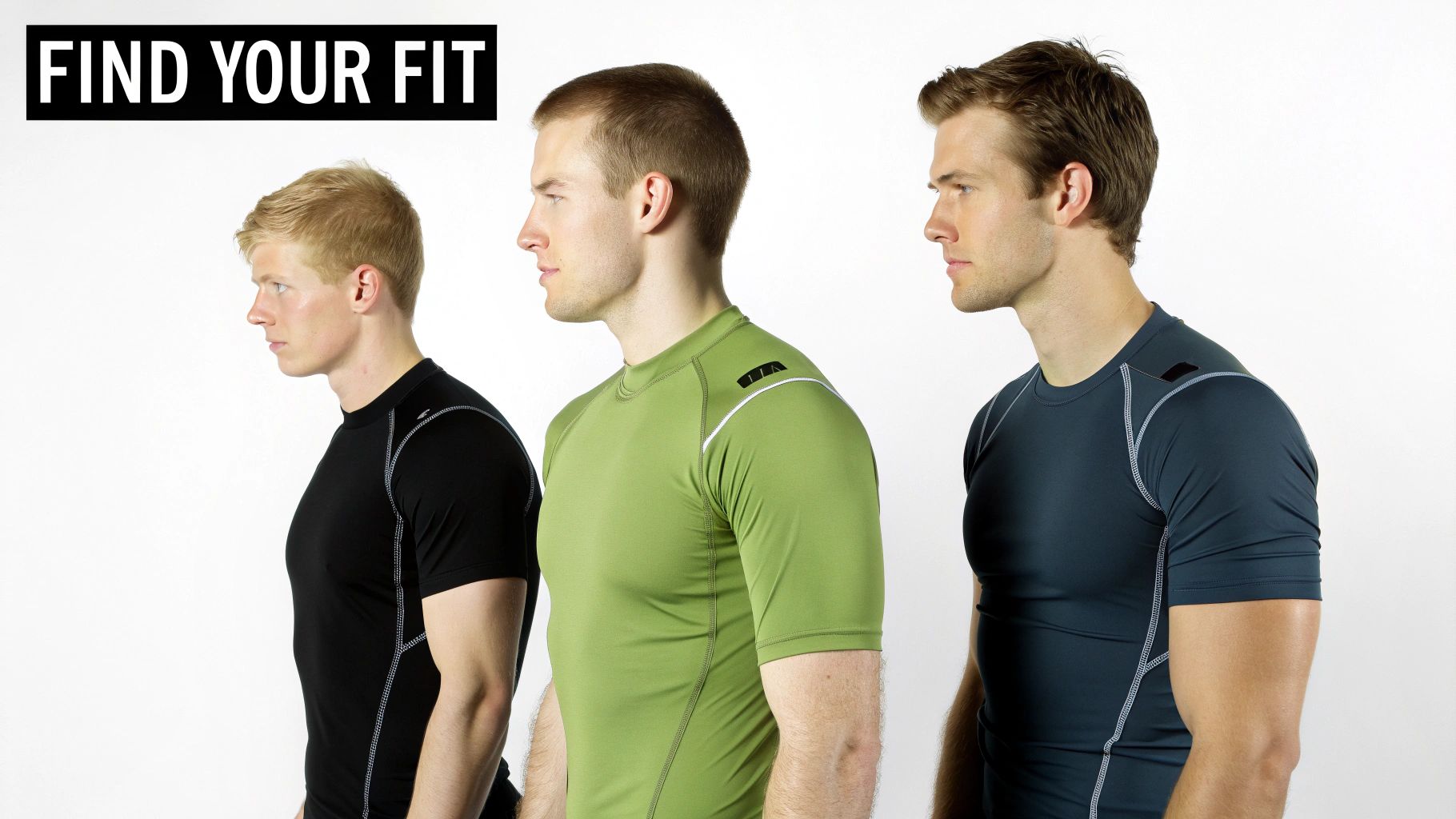
The Three Core Gym Fits Explained
Choosing the right fit is like picking the right tool for the job. You wouldn’t use a sledgehammer to hang a picture frame, right? In the same way, you shouldn't wear baggy sweats for a high-intensity spin class. Each fit has a purpose.
-
Compression Fit: This is your second skin. Compression gear is meant to be tight, applying gentle, consistent pressure to your muscles. The idea is to boost blood flow, cut down on muscle vibration, and maybe even help you recover a bit faster. It’s perfect for running, HIIT, or as a base layer for leg day. The key is finding a fit that’s snug and supportive without making you feel like you can't breathe.
-
Athletic Fit: This is the workhorse of your gym wardrobe, sometimes called a standard or tapered fit. It follows the lines of your body without clinging, striking that perfect balance between supportive compression and a comfortable, relaxed feel. An athletic-fit shirt will typically narrow slightly at the waist while giving you plenty of room in the shoulders and chest.
-
Relaxed Fit: When comfort is king, you want a relaxed fit. This style is looser, offering maximum breathability and complete freedom of movement. It's ideal for warm-ups, cool-downs, or lower-intensity days focused on mobility or yoga. Think of your favorite joggers or an oversized hoodie—perfect for layering and pure comfort.
Nailing the Fit for Your Body Type
We all know a "medium" from one brand can fit completely differently than a "medium" from another. That’s why you have to look past the label on the tag. It's much more important to focus on how a piece of clothing actually fits your body, especially if you have a taller or plus-size build.
A good top should have seams that sit right on the edge of your shoulders—not drooping down your arms or creeping up toward your neck. You should be able to move your arms freely without the fabric pulling tight across your back. For pants or shorts, the waistband needs to sit comfortably on your hips without digging in or sliding down every time you bend over.
The right fit should feel like it's not even there. It moves when you move, gives you support where you need it, and never distracts you from your workout. If you're constantly fidgeting and adjusting your clothes, the fit is wrong.
Key Fit Checkpoints for Every Garment
Next time you’re trying on new gym clothes, run through this quick mental checklist. It’ll help you spot a great fit right away.
- Shoulder Seams: For any tee, tank, or hoodie, the seam should sit squarely on the bony point of your shoulder.
- Torso Taper: A well-designed athletic shirt should be snug across your chest and shoulders but give you a little more room around the waist. It should complement your shape, not squeeze it.
- Garment Length: Raise your arms straight overhead. If the shirt rides up and exposes your stomach, it's too short. Shorts should end at a length that feels comfortable and doesn't get in the way of a deep squat—for most guys, that’s just above the knee.
- Waistband and Inseam: The waistband on your shorts or pants needs to be secure without being painfully tight. If you’re not sure about your size, taking a moment to check a guide on how to measure your waist for pants can make all the difference. The inseam should also give you enough room to move without feeling restricted.
Building Your Essential Workout Wardrobe
Think of building your collection of mens gym clothes like putting together the ultimate toolkit. You wouldn't use a hammer to turn a screw, right? The same logic applies here—having the right gear for the right workout is key to getting the best results.
A well-thought-out wardrobe means you're always comfortable, prepared, and ready to perform, no matter what the training session throws at you. Instead of just grabbing random pieces, the goal is to create a versatile system where everything works together, from your most intense lifting days to light cardio and all-important recovery.
Foundational Tops for Performance
The shirt on your back can make or break a workout. It directly impacts your comfort, your temperature, and your range of motion. Having a few core styles on rotation means you can adapt on the fly.
-
Performance Tees: This is your everyday workhorse. A great performance t-shirt, made from a blend that wicks sweat away, is absolutely non-negotiable. It's the staple that keeps you dry during a tough session and works for pretty much any activity, from the weight rack to the treadmill.
-
Tank Tops and Stringers: When you need total freedom of movement, especially on an upper-body day, a tank top is your best friend. It gives your shoulders and arms the space they need for big movements like bench presses or overhead lifts. That drop armhole design isn't just for looks—it also provides fantastic ventilation to keep you from overheating.
-
Long-Sleeve Performance Shirts: Don’t sleep on the long-sleeve tee. It’s perfect for those chilly gyms or as a warm-up layer you can peel off once your muscles start firing. It also offers a bit of extra coverage and can protect your skin from scuffs on gym equipment during floor exercises.
Essential Bottoms for Every Workout
The shorts or pants you choose can be the difference between a great session and a frustrating one. You need to be able to move without restriction, and each style is built for a different purpose.
The right bottoms are the foundation of your workout. They should never restrict your movement during a deep squat or feel cumbersome during a sprint. The goal is to find pieces that move so seamlessly with your body, you forget they’re even there.
A solid collection needs a mix of both shorts for high-intensity work and pants for warm-ups, leg days, and cooler weather. This variety ensures you’re ready for anything.
Key Bottoms for Your Gym Bag
-
Training Shorts: The undisputed MVP of gym bottoms. Look for shorts made from a lightweight, four-way stretch fabric that hits just above the knee. That length is crucial—it keeps the material from getting in your way during squats and lunges. The best pairs are also incredibly durable, ready to handle everything from sprints to a yoga class.
-
Joggers and Sweatpants: Absolutely essential for warming up, cooling down, and crushing leg day. A good pair of joggers provides enough warmth to keep your muscles loose and primed for heavy lifts like squats or deadlifts. Their tapered fit is also practical, preventing extra fabric from snagging on machines. If you prefer a more classic, relaxed silhouette, our guide to men's straight-leg sweatpants breaks down options that perfectly balance comfort with a modern look.
-
Compression Leggings: You can wear them on their own or as a base layer under shorts. Compression leggings are fantastic for supporting your muscles, improving blood flow, and wicking sweat like nothing else. They’re ideal for high-impact activities, running, or just adding extra warmth during a cold-weather training session.
Crucial Layering Pieces for Versatility
Let’s be real—your workout doesn’t just happen within the four walls of the gym. Layering pieces are what bridge the gap. They're what you wear on the commute, what you use to warm up properly, and what keeps you comfortable as you cool down. They add a ton of versatility to your core collection of mens gym clothes.
A lightweight performance hoodie or a quarter-zip pullover is perfect for throwing on over your gym tee. They trap just enough heat to get your muscles warm without making you sweat before you’ve even started. These pieces are typically made from soft, flexible fabrics that won't restrict you during dynamic stretches, making them a practical and stylish final touch to your essential workout wardrobe.
Styling Gym Clothes for Everyday Life
Let's be honest, the line between your workout gear and your weekend wear has pretty much vanished. Today's best mens gym clothes aren't just for the weight room anymore; they're built for an active, modern life. Nailing that "athleisure" look means you can go from a morning gym session to a coffee run without needing a complete wardrobe change—and still look put-together.
This isn't about just throwing on your sweatiest gym shorts to run errands. It’s a more thoughtful approach, blending the comfort of your performance apparel with the clean, sharp lines of modern style. The whole game is about getting the fit right, choosing smart fabrics, and layering like you know what you're doing.

Building the Foundation of Your Look
Making that smooth transition from the gym to the street starts with your core pieces. A great-fitting pair of performance joggers or technical pants is the anchor for any solid athleisure outfit. You'll want to look for a tapered fit that slims down toward the ankle—it creates a much cleaner, more intentional silhouette than old-school baggy sweatpants.
Pair those bottoms with a simple, high-quality t-shirt. A plain crewneck in a go-to neutral like black, white, gray, or navy is the perfect canvas to build on. Pay attention to the fabric here; a premium cotton or a soft modal blend just looks and feels more elevated than a shiny, obviously-techy gym shirt.
Layering for Style and Function
Layering is what really takes your gym clothes and turns them into a proper outfit. It adds some visual interest and texture, but it’s also practical, letting you adapt as you move through different settings during your day.
-
The Sleek Hoodie: A modern performance hoodie is a workhorse, especially in a solid, dark color. The technical fabric and clean design look just as good with joggers as they do with dark denim for a smart-casual night out.
-
The Quarter-Zip Pullover: This piece is a cheat code for versatility. A quarter-zip feels a bit more refined than a standard crewneck sweatshirt, making it the perfect thing to throw over a performance tee.
-
The Lightweight Jacket: A bomber jacket or a clean, minimalist windbreaker can instantly level up your entire look. It adds a structured outer layer that frames the outfit, signaling that your style was a choice, not an accident.
The secret to great athleisure is all about balance. Think of it as a mix-and-match game. If you’re wearing technical joggers on the bottom, ground the outfit with a classic cotton tee and a stylish jacket on top. It’s this blend of performance and classic casualwear that looks both effortless and sharp.
If you want to dive deeper into this style, our guide on athletic casual wear for men is packed with more tips and outfit ideas to help you master the look.
Finishing with the Right Details
The little things are what separate a deliberate, stylish look from one that just looks like you couldn't be bothered. The right accessories are the final step that pulls it all together.
-
Choose Clean Sneakers: Your shoes are everything here. It’s time to retire the beat-up trainers you actually work out in and swap them for a pair of fresh, minimalist sneakers. Classic styles in white or black leather or canvas are your best bet—they're incredibly versatile and immediately make an outfit look sharper.
-
Opt for a Quality Bag: Ditch the bulky gym duffel for a sleek backpack or a modern crossbody bag. It's a simple switch, but it makes your whole vibe feel more polished and ready for the city.
-
Mind the Small Things: A classic watch or a simple baseball cap can add that last bit of personality. These details show you’re not just wearing gym clothes; you’re styling them.
Making Your Performance Gear Last Longer
Think of your favorite high-quality mens gym clothes as an investment in your fitness goals. Just like any good tool, it needs a bit of care to keep performing at its best for years to come. Tossing technical apparel in a hot wash with the wrong stuff is the fastest way to kill the features you paid for.
Proper care isn't just about getting things clean. It's about preserving the very fabric technology that keeps you comfortable—the moisture-wicking power, the four-way stretch, and the breathability that lets you push harder. When you ignore the care label, you're essentially turning down the dial on your gear's effectiveness with every single wash.
The Golden Rules of Washing Gym Clothes
So, what are the biggest enemies of modern performance fabrics? Heat and certain laundry products. High temperatures can permanently wreck delicate synthetic fibers like elastane, making them lose their essential stretch and snap-back.
To keep your gear in top shape, just follow these simple steps:
- Wash in Cold Water: Hot water is the enemy of elastic fibers and can cause shrinking. A good detergent in cold water cleans just as well while being much gentler on your apparel.
- Turn Garments Inside Out: This simple trick protects logos and the outer surface from friction and pilling. Plus, it gives the detergent direct access to the sweat and grime on the inside.
- Use a Mild Detergent: Harsh chemicals can break down the technical fibers over time. Stick with a gentle detergent, or even better, one made specifically for activewear.
A crucial tip: Never, ever use fabric softener or dryer sheets. They work by coating fibers in a waxy film to create that "soft" feeling. On performance fabrics, this coating clogs the microscopic pores that pull sweat away from your skin, completely killing the moisture-wicking technology.
Drying and Odor Elimination
How you dry your mens gym clothes is just as critical as how you wash them. The intense heat from a standard machine dryer is one of the quickest ways to destroy the elasticity and ruin the fit of your favorite workout gear.
The absolute best way to dry your gear is to simply air-dry it. Hang it on a rack or lay it flat. Performance fabrics are designed to dry quickly anyway, so it won’t take long. If you're in a pinch and must use a dryer, use the lowest heat setting you can—or better yet, the no-heat, tumble-only option. Following these steps will ensure your gear stays ready for action, workout after workout.
Got Questions About Gym Clothes? We've Got Answers.
When you're shopping for new performance gear, a few practical questions always seem to pop up. Knowing the answers helps you choose wisely and really get your money's worth out of every piece. Let's tackle some of the most common things guys wonder about their mens gym clothes.
How Often Should I Replace My Gym Clothes?
There's no magic expiration date here. How long your gear lasts really depends on how often you work out, how hard you go, and—most importantly—the quality of the fabric. Good performance wear is designed to take a beating, but even the best stuff wears out eventually.
So, how do you know it's time? Keep an eye out for the obvious signs. If the waistband in your shorts has lost its snap, the fabric is looking thin and worn, or your compression gear just doesn't feel supportive anymore, it's time to retire them. Another dead giveaway is a funky smell that just won't wash out; that means the fabric's odor-fighting tech has given up the ghost.
Pro Tip: A solid rotation of three to five workout outfits is the sweet spot for most guys. This simple habit means no single piece gets overworked, which dramatically extends the life of everything in your gym drawer.
Is It Better to Wear Loose or Tight Clothes to the Gym?
Ah, the great debate. The truth is, it all comes down to personal preference and the type of workout you're doing. Both fits have their place.
- Tight Clothing: Think compression shorts or fitted tops. This style is fantastic for intense training, running, and lifting. It gives your muscles that supportive squeeze, can help with blood flow, and won't get caught on equipment. No snags, no distractions.
- Loose Clothing: A more relaxed fit is all about comfort and airflow. It’s perfect for anything where you need a totally free range of motion, like yoga, stretching, or just for your warm-up and cool-down.
Honestly, the best approach is often a mix of both. A lot of guys swear by wearing supportive compression shorts under a pair of looser, more flexible training shorts. You get the muscle support you need and the freedom to move—the best of both worlds.
What Is the Best Way to Prevent Odor?
That unmistakable gym-bag smell comes from bacteria that thrive on the sweat and oils caught in the fabric. The secret to keeping things fresh is to act fast and wash smart.
First off, don't let your sweaty clothes sit balled up in your bag. That's an open invitation for bacteria. As soon as you get home, hang them up to air out, and wash them as soon as you can. If you're dealing with some seriously stubborn smells, try a pre-soak. Just let the clothes sit for 30 minutes in a mix of one part white vinegar and four parts cold water before you wash them. It works wonders.
Are Expensive Men's Gym Clothes Really Worth It?
In most cases, yes. While you can always find cheaper options, when you invest in quality gear, you're paying for real, tangible benefits. Premium apparel uses more advanced fabrics that are way better at wicking sweat and holding up over time. You also get smarter construction details, like flatlock seams that won't chafe or irritate your skin.
The result? You're more comfortable, you can perform better, and the clothes last a whole lot longer. Over time, that adds up to much better value.
At ModaMuse, we’re all about creating gear that powers your performance without sacrificing style. Our collections are designed with durable, breathable fabrics for the guy who moves from the weight room to the weekend without missing a beat. See what’s new and find the pieces that work as hard as you do. Shop the collection at musaicstore.com.
