
Let's be honest, finding the best men's activewear brands isn't about crowning one single winner. It’s about finding the right gear for you—your workout, your body, and your style. Sure, giants like Nike, Lululemon, and Under Armour dominate the conversation for a reason; they consistently nail the trifecta of performance tech, quality materials, and a fit that moves with you.
This guide is designed to help you see past the marketing hype and get down to what really matters, so you can make a choice that actually works.
Your Guide to the Best Mens Activewear Brands
Walking into the world of men’s activewear can feel like a sensory overload. Every brand promises to make you faster, stronger, and better. But what’s the real difference between a great piece of gear and one that just looks the part?
It really boils down to a few key things: innovative fabrics, smart design, and the kind of durability that withstands countless workouts and wash cycles. You're looking for gear that feels less like clothing and more like a second skin—something that supports your performance without ever getting in the way.
Think of this guide as your personal toolkit. We'll cut through the noise and break down the essentials, from moisture-wicking technology to ergonomic seams. But first, let’s get a quick lay of the land.
Top Men's Activewear Brands at a Glance
To get started, here’s a quick look at some of the heavy hitters in the activewear world. This table breaks down their core strengths, so you can immediately see which brands might align with your priorities, whether you're focused on high-intensity training, premium comfort, or sustainable practices.
| Brand | Best For | Key Feature | Price Range |
|---|---|---|---|
| Nike | All-Around Performance & Innovation | Dri-FIT Moisture Management | $$ - $$$ |
| Lululemon | Versatility & Premium Comfort | ABC™ (Anti-Ball Crushing) Tech | $$$ - $$$$ |
| Under Armour | High-Intensity Training & Durability | HeatGear® & ColdGear® Fabrics | $$ - $$$ |
| Rhone | Commuting & Everyday Performance | GoldFusion Anti-Odor Technology | $$$ - $$$$ |
| Gymshark | Value & Community-Driven Style | Seamless Construction | $ - $$ |
This snapshot shows just how specialized the market has become. The right brand for a marathoner is probably different from what a dedicated weightlifter needs, and that’s perfectly fine.
The search for the best activewear is personal. It depends on your workout style, performance goals, and budget. The right brand for a marathon runner might differ from the one a weightlifter prefers.
The distinctions between these brands are what make all the difference. Take Nike, for example. It’s an undisputed leader for a reason, with a massive market capitalization of $107.03 billion. Its influence is global, capturing a 12% share of the UK sportswear market among Gen Z shoppers who demand both performance and street-style credibility. Discover more insights on top sportswear companies.
Getting a handle on these nuances is your first step toward making a smarter purchase. Many of these same principles also apply to athleisure—the popular style that seamlessly blends performance gear with everyday life. If that sounds like your lane, be sure to check out our guide on the best athleisure for men.
Ultimately, this article is here to arm you with the knowledge to choose with confidence. Your next piece of activewear shouldn't just be something you wear; it should be an investment that elevates both your performance and your style.
Understanding Performance Fabrics and Technology
The real difference between a great workout and a miserable one often comes down to what you’re wearing. It’s not about the logo on your chest; it’s about the science woven into the threads of your gear. The best activewear is built on a foundation of performance fabric, and choosing the right material is like picking the right tool for the job. Get it right, and you’ll barely notice your clothes. Get it wrong, and you’ll be fighting them the whole time.
So, what makes a fabric a "performance" fabric? At its heart, it’s all about managing sweat and heat.
Think about a standard cotton t-shirt. When you start sweating, it acts like a sponge—soaking up every drop, getting heavy, and sticking to your skin. It takes forever to dry. Now, contrast that with a modern performance fabric. It's more like a high-tech squeegee, actively pulling moisture away from your skin, spreading it across the surface, and letting it evaporate in a flash.
This is what we call moisture-wicking, and it's the single most important job of your activewear. It keeps you feeling light, prevents that awful chafing, and helps your body regulate its temperature more efficiently.
The image below breaks down the three main things you'll juggle when picking out new gear: performance, style, and budget.

Finding the sweet spot where technical function meets your personal taste and what you're willing to spend is the key to building a wardrobe that actually works for you.
Decoding Common Fabric Types
Flip over the tag on any piece of high-quality activewear, and you'll probably see a few of the same names pop up. Each one brings something different to the table. Knowing what they do is the first step to making a smart purchase.
-
Polyester: This is the undisputed champion of the activewear world. It’s tough as nails, lightweight, and incredible at wicking moisture away. You'll find it in just about everything, especially gear meant for high-sweat activities like running or HIIT.
-
Nylon: Think of nylon as polyester's slightly smoother, stretchier cousin. It’s known for its incredible durability and silky feel, making it a go-to for shorts and track pants where you need a bit more give.
-
Spandex (Lycra/Elastane): You’ll never see a garment made of 100% spandex, but a little bit goes a long way. Blending in just 5-10% gives a fabric that all-important stretch and snap-back, so your shorts don't get baggy after one set of squats. It’s essential for anything that requires a full range of motion.
-
Merino Wool: Forget that itchy sweater your grandpa used to wear. Modern merino wool is a natural powerhouse—it's super soft, breathes beautifully, and fights odor-causing bacteria all on its own. Best of all, it’s a master at temperature regulation, keeping you warm when it's cold and cool when it's hot. Perfect for a long hike.
The real secret sauce is almost always in the blend. When you see a tag that says "88% Polyester, 12% Spandex," it’s telling you a story. It’s designed to pull sweat off your skin while offering serious flexibility, giving you the best of both worlds.
Understanding Brand-Specific Technologies
Once you get a feel for the base materials, you can start to see past all the fancy marketing names brands slap on their gear. Terms like Dri-FIT or HeatGear® aren't new magical fibers; they're proprietary ways of constructing or treating those core fabrics to make them even better at their job.
For example, Nike’s Dri-FIT is basically a very cleverly constructed polyester that creates more surface area for sweat to evaporate from. Under Armour’s HeatGear® is engineered with a hyper-breathable weave to keep you cool when the temperature climbs.
One non-negotiable feature you should always look for is four-way stretch. This means the fabric stretches and recovers both vertically and horizontally, moving exactly how your body moves. It’s what separates a great pair of training shorts from a restrictive one. This is the kind of detail that makes all the difference when you're looking for men's gym clothes that truly enhance your workout.
Armed with this knowledge, you can cut through the noise. You can look at a t-shirt or a pair of shorts and understand what it was built to do—and more importantly, if it’s right for what you need it to do. You're no longer just buying a brand; you're investing in performance.
Why the Right Fit Is Crucial for Performance
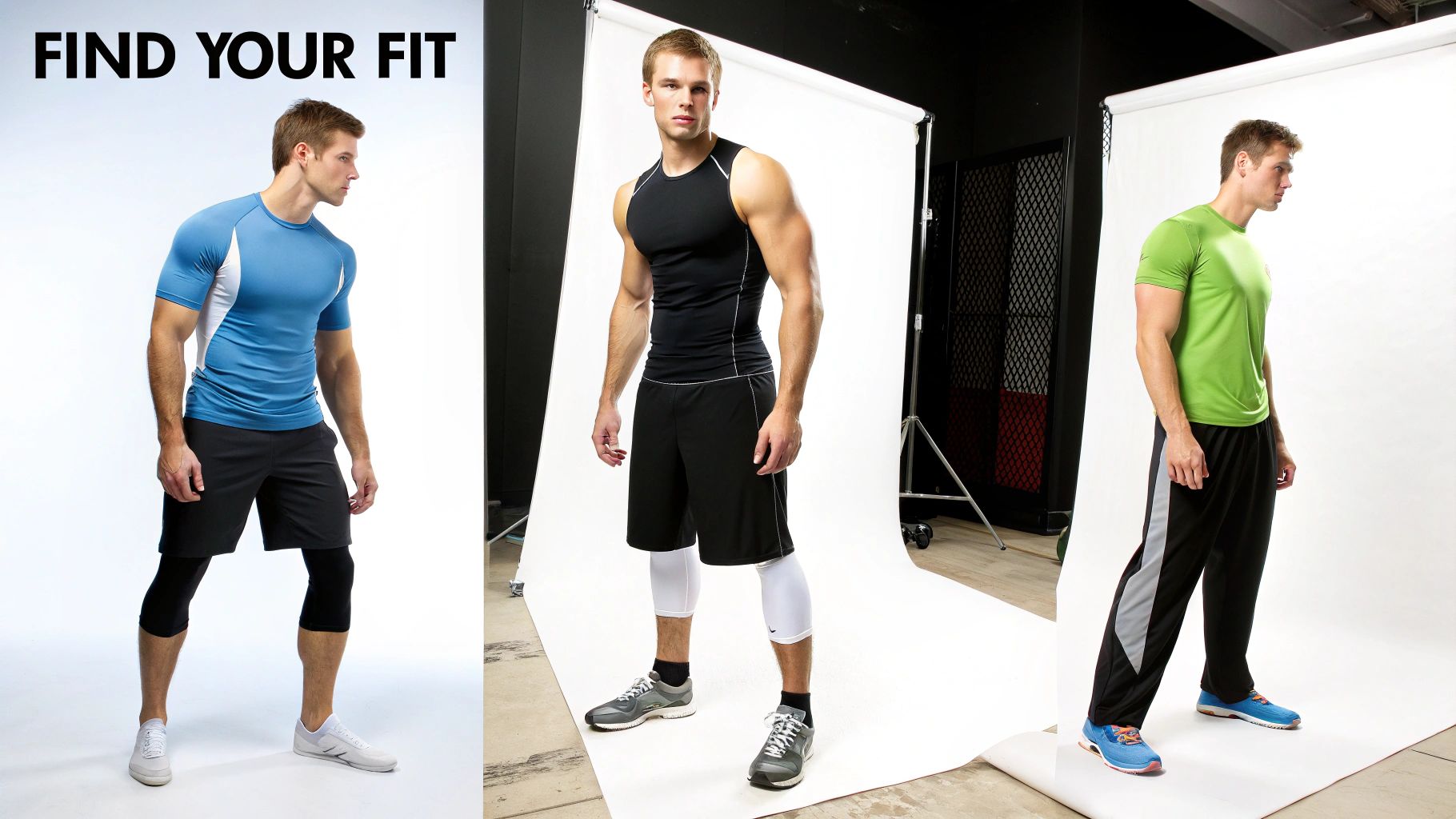
We can talk all day about high-tech fabrics and moisture-wicking wizardry, but none of it matters if your gear doesn't fit right. A poor fit isn't just a minor annoyance—it's a performance killer. It restricts your movement, causes painful chafing, and completely negates the benefits of the very technology you invested in.
Think of it like buying a race car but never getting a wheel alignment. You'll never get the speed or handling it was built for.
The right fit ensures your clothing works with you, not against you. Moisture-wicking materials need to touch your skin to pull sweat away, and compression gear needs to be snug to support your muscles. Getting this part right is the absolute foundation for finding the best mens activewear brands that will actually elevate your game.
Ultimately, the goal is for your clothes to disappear, letting you get completely lost in your workout.
Matching the Fit to Your Activity
Activewear isn’t a one-size-fits-all deal. The fit you choose should be a strategic decision based on what you’re doing. There are really three main styles to know: compression, fitted, and relaxed.
-
Compression Fit: This is your second skin. It’s designed to be skin-tight, applying a gentle, consistent pressure to your muscles. This can boost blood flow and cut down on muscle vibration during intense activities. It’s the perfect choice for hard runs, HIIT workouts, or heavy lifting where you need that extra bit of stability and support.
-
Fitted (or Athletic) Fit: This cut follows the shape of your body without squeezing it. It gives you a streamlined feel that prevents extra fabric from flapping around or getting snagged. This makes it a fantastic all-rounder for almost anything, from general gym sessions to cycling. You get a great balance of support and freedom.
-
Relaxed (or Loose) Fit: When comfort and maximum airflow are the top priority, you want a relaxed fit. This style hangs loosely, giving you total freedom. It’s ideal for things like yoga, stretching, and mobility work, or for just throwing on during your warm-up and cool-down.
A huge mistake people make is picking a fit based purely on looks. The real magic is in the function. Those compression shorts aren't just a style choice for a marathon; they're a piece of equipment designed to help you endure longer and recover faster.
The Devil Is in the Details
Beyond the overall cut, it’s the small, thoughtful design elements that truly separate good activewear from great activewear. These are the ergonomic features engineered to eliminate irritation and help you move better.
One of the most important (and often overlooked) features is a gusseted crotch. Instead of having four seams meet in a single, vulnerable point, a diamond-shaped piece of fabric is sewn in. This simple change disperses stress across the fabric, preventing rips during deep squats or lunges and giving you a surprising amount of extra mobility.
Another game-changer is seamless construction. By knitting the garment in one continuous circle, brands can get rid of seams in high-friction zones like under your arms or along your sides. This is a lifesaver for reducing chafing on long runs. When seams are necessary, look for flatlock seams. They lie completely flat against the fabric instead of being raised, achieving the same chafe-free goal.
Nailing Your Size When Shopping Online
Let's be honest: trying to make sense of online size charts can feel like cracking a secret code. A "Medium" from one brand can feel like a "Large" from another. The only foolproof way to get the right fit is to take your own measurements.
Grab a soft measuring tape and get numbers for three key spots: your chest (around the fullest part), your natural waist (the narrowest point, usually just above your belly button), and your hips (around the widest part). Always, always compare these measurements to the brand's specific size guide.
For a more detailed guide, you can learn exactly how to measure waist size for pants to get it perfect. Taking five minutes to do this can save you the headache of a return and make sure your new gear is ready to perform right out of the box.
How to Judge Durability and Get Your Money's Worth
Think of great activewear as an investment in your training. A cheap shirt that unravels or loses its shape after a few washes isn't a bargain—it's just a waste of money. Real value isn’t just about the price tag; it’s about how a piece of gear holds up to grueling workouts, endless wash cycles, and constant stretching without giving up.
The trick is to look past the logo and learn to recognize quality craftsmanship. Once you know the tells, you can spot the small details that signal a garment is built to last.
What Quality Construction Actually Looks Like
You don't have to be a textile expert to spot good construction. Whether you're in a store or scrolling through product photos online, a few key signs give the game away.
First, check the seams. The best of the best use what’s called a flatlock seam. Instead of being raised and bulky like a traditional stitch, a flatlock seam lies perfectly flat against the fabric. It’s a game-changer for comfort because it eliminates chafing, and it’s a sure sign of a premium, well-thought-out garment.
Next, look for extra reinforcement where it really counts. The top men's activewear brands add beefed-up stitching in high-stress areas like:
- Shoulder Seams: This is where barbells rest and backpack straps rub.
- Inseams and Crotch: Think about the stress these points are under during deep squats, lunges, or sprints.
- Armholes: Crucial for holding the garment's shape and preventing tears during any kind of upper-body movement.
Think of reinforced stitching like the rebar in concrete. It’s the unseen internal structure that gives the whole thing strength and integrity, making sure it won't fall apart when you push it to its limits. For gear you plan to use for years, this is non-negotiable.
You can often see a brand’s commitment to durability right in its product lineup. Take Under Armour, for example. They've built an entire reputation on being tough, and their $5,864 million in sales is driven in part by famously durable lines like HeatGear and ColdGear. They've tapped into a massive market of guys who demand gear that lasts, a segment expected to grow at an 8.7% CAGR through 2030. It just goes to show: durability sells. Explore more sportswear industry statistics.
A Quick Durability Checklist
Before you buy, run through this quick mental checklist to gauge the quality of any piece of gear:
- Seam Check: Are they flatlock? Do they look neat and tight, or are there loose threads hanging off?
- The Stretch Test: Give the fabric a gentle tug. Does it snap right back into shape? If it looks saggy or warped even after a small pull, it’s not going to hold its fit for long.
- Inspect Stress Points: Look for little clusters of tight, reinforcing stitches (called bar tacks) at the corners of pockets, at the base of zippers, and anywhere else that looks like it might take a beating.
- Fabric Feel: How does it feel in your hands? Quality material feels substantial, not flimsy or see-through when you stretch it a bit.
Making Your Investment Last
Of course, even the toughest gear won't survive if you don't take care of it. The advanced synthetic fibers that make your activewear so good at wicking sweat and stretching are surprisingly sensitive to heat and certain chemicals.
To keep your gear in top form, always wash it in cold water. When it's time to dry, either hang it up or use the absolute lowest heat setting on your dryer. High heat is the enemy of elastic fibers like spandex—it will permanently cook the stretch right out of them. Oh, and skip the fabric softener. It leaves behind a waxy residue that clogs the pores of the fabric, killing its moisture-wicking ability.
By learning what to look for and how to care for it, you can make sure every dollar you spend on activewear is a smart investment.
Comparing the Top Mens Activewear Brands
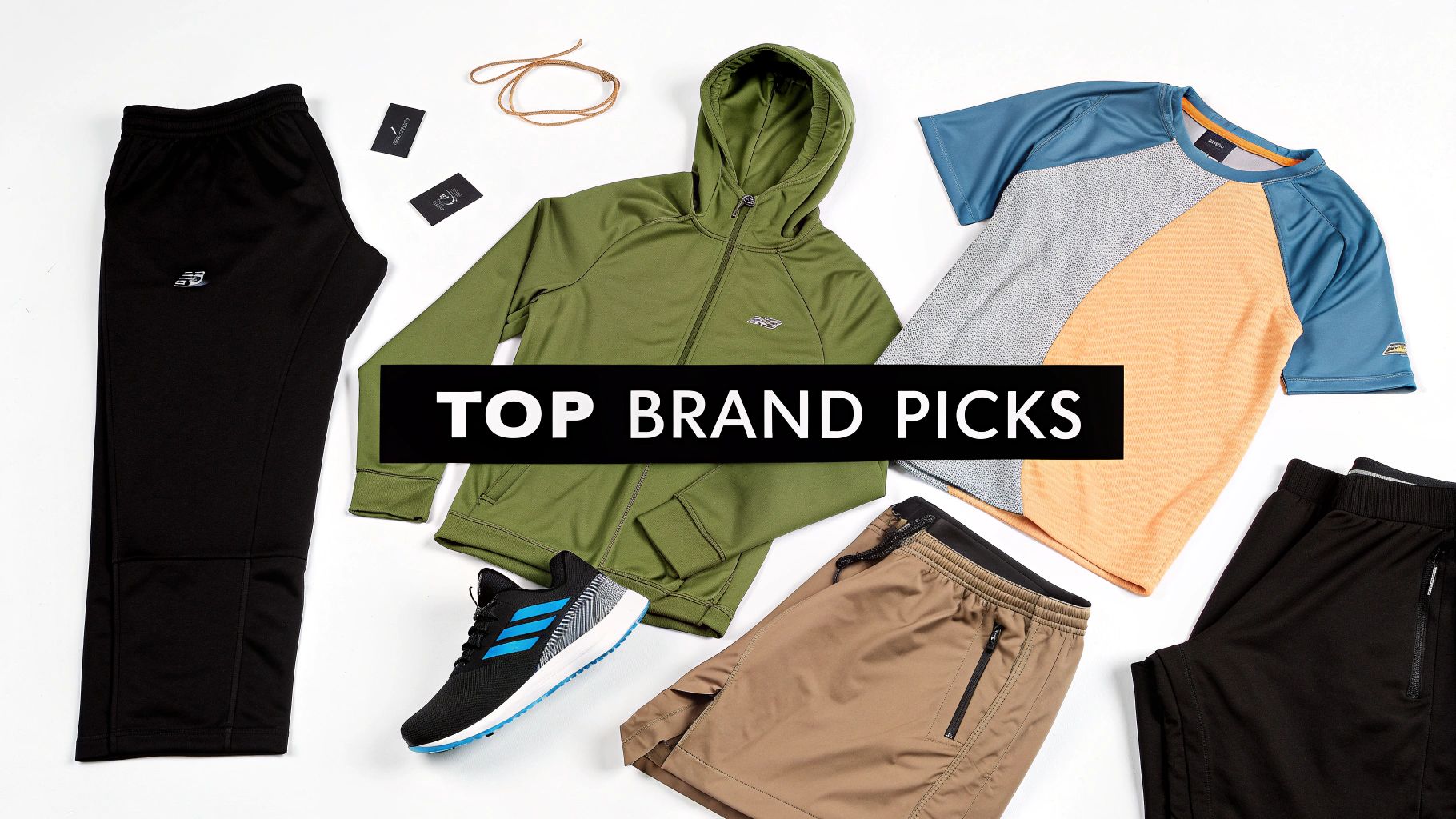
Alright, you’ve got the theory down. You know what separates great activewear from the cheap stuff—from the science behind the fabrics to the importance of a dialed-in fit. Now, let’s see how that plays out in the real world by looking at how the industry leaders build their gear.
Each of the best mens activewear brands has its own personality. They’ve carved out their corner of the market by doubling down on what they do best.
Some brands live on the bleeding edge of material science, constantly chasing the next big innovation. Others have mastered the art of creating gear that feels just as right on a morning coffee run as it does during a high-intensity workout. Putting these heavy hitters side-by-side will help you match your own needs—whether that's raw performance, all-day comfort, or bombproof durability—with the brand that truly gets it right.
Nike: The Innovation Powerhouse
When you think about pure athletic performance and game-changing tech, Nike is almost always part of the conversation. For decades, they’ve been a force of nature, building a rock-solid reputation on the back of relentless R&D.
Take their signature Dri-FIT technology. It’s not just a buzzword; it’s a masterfully engineered microfiber polyester that actively yanks sweat away from your skin and spreads it out for lightning-fast evaporation. This obsessive focus on moisture control makes Nike a top pick for runners, hoopers, and anyone who isn't afraid to sweat.
- Fit Profile: Nike’s fit is generally true-to-size but definitely leans athletic. Expect a more streamlined, tapered cut designed to reduce drag and stay out of your way.
- Durability: Their construction is consistently top-notch, with an emphasis on creating lightweight fabrics that can handle thousands of reps and miles.
Nike’s real genius is its ability to take insights from the world's best athletes and bake them into products for the rest of us. Their gear is built with a singular mission: to help you perform better, period.
Adidas: Where Performance Meets Streetwear
Adidas has absolutely nailed the sweet spot where high-level performance gear collides with modern street style. The iconic three stripes have become a symbol of both athletic heritage and cultural cool.
Under the hood, technologies like AEROREADY (which you might remember as Climalite) do the heavy lifting, managing moisture to keep you dry and focused. But what truly sets Adidas apart is its unapologetic commitment to style. With a staggering $43.42 billion market cap, Adidas AG has earned its place, with 16.33% of men naming it their favorite brand. Their ability to fuse breathable, performance-minded tops with a street-ready aesthetic has been a huge factor in getting more guys into active lifestyles. You can read the full research about activewear market trends to see the bigger picture.
- Fit Profile: Adidas often uses a slightly more relaxed or European cut, giving their pieces a bit more room than some of their American competitors. This makes their gear incredibly versatile.
- Price Point: They typically land in the mid-to-premium range, but the value is undeniable when one piece can serve as both your gym shirt and your weekend go-to.
Under Armour: The Specialist in Toughness
Under Armour clawed its way to the top with a reputation for being tough as nails. The brand cut its teeth making gear that could survive the brutal demands of American football, and that relentless, no-excuses attitude is still baked into its DNA.
Their cornerstone technologies, HeatGear® for staying cool and ColdGear® for staying warm, are built for extremes. HeatGear® is all about maximum breathability and wicking, while ColdGear® uses a clever dual-layer fabric that traps body heat without weighing you down.
- Fit Profile: Under Armour is synonymous with its compression fit, which is designed to squeeze and support your muscles for better performance. They offer "Fitted" and "Loose" cuts too, but that skin-tight feel is their signature.
- Durability: This is where Under Armour leaves the competition in the dust. Their stuff is made with rugged fabrics and reinforced stitching, which is why you see it everywhere in weight rooms and on contact sport athletes.
Lululemon: The Master of Comfort and Versatility
Lululemon started in the yoga studio but has since become a juggernaut in men's activewear by obsessing over three things: premium materials, next-level comfort, and a clean, modern look. Their gear is built for you to move in, but it’s designed for you to live in.
The magic is in their proprietary fabrics, like the buttery-soft Nulu™ and the original Luon®. For men, the real breakthrough was their ABC™ (Anti-Ball Crushing) technology. By combining an ergonomic design with four-way stretch fabric, they created pants and shorts that offer total freedom of movement, proving they think about every last detail.
- Fit Profile: Lululemon delivers a tailored, modern fit that complements your build without ever feeling tight or restrictive. Their sizing is known for being incredibly consistent.
- Versatility: This is Lululemon’s trump card. Their gear is specifically designed to look just as good at brunch as it does in the gym, which helps justify the premium price tag.
Brand Feature Comparison
To make things even clearer, here’s a quick-glance table breaking down the core strengths of these industry leaders. Think of this as a cheat sheet to help you narrow down your options based on what matters most to you.
| Brand | Primary Strength | Signature Technology | Sustainability Focus |
|---|---|---|---|
| Nike | Elite Athletic Performance & Innovation | Dri-FIT, Flyknit, React Foam | "Move to Zero" initiative using recycled polyester and reducing carbon footprint. |
| Adidas | Performance-Streetwear Fusion & Style | AEROREADY, Boost, Primeknit | Heavy use of recycled materials (Primeblue, Primegreen) and partnership with Parley for the Oceans. |
| Under Armour | Unmatched Durability & Compression | HeatGear®/ColdGear®, HOVR | Developing more sustainable material innovations and aiming to reduce environmental impact across its supply chain. |
| Lululemon | Supreme Comfort & Everyday Versatility | Luon®, Nulu™, ABC™ Technology | Focus on sustainable materials, product circularity, and creating a "Like New" resale program. |
Ultimately, the "best" brand is a personal choice. By understanding what each one brings to the table, you can confidently invest in gear that won't just perform well but will also feel like it was made just for you.
How to Make Your Final Decision
Alright, you've done the research. You can now spot the difference between a high-performance garment and a cheap knockoff from a mile away. So, how do you pull the trigger with confidence?
The final step is about finding gear that feels less like clothing and more like a second skin—something that supports every lunge, sprint, and stretch without you ever having to think about it. It’s not about finding the one "best" brand, but about making sure a specific item is the right tool for your job.
Your Pre-Purchase Gut Check
Before you hit that "buy" button, run your top contenders through one last mental checklist. This isn’t complicated, but it’s the step that separates a good purchase from a great one that you’ll rely on for years.
- Materials Match the Mission? Is the fabric built for what you actually do? If you’re a heavy sweater, you need a serious moisture-wicker like polyester. If you're hitting the trails in shifting weather, something like merino wool is your best friend.
- Fit for Function? Does the cut—compression, fitted, or relaxed—make sense for your movements? The perfect running short has a totally different construction than a pair of bottoms made for yoga.
- Durability Details? Did you check for the small signs of quality? Look for those flatlock seams, reinforced stitching in high-wear areas, and fabric that feels substantial and snaps right back when you give it a little stretch.
- Brand Specialty? Is the brand’s reputation in line with your goals? A brand known for its feather-light running gear might not be the best pick if you need something that can stand up to scrapes from a barbell.
At the end of the day, ask yourself this simple question: Does this piece of gear solve a problem for me? Whether that’s chafing on long runs, feeling restricted during deep squats, or just not wanting a shirt that’s drenched after 10 minutes, your activewear should be the solution.
A Couple of Last-Minute Logistics
Once an item has passed the gut check, there are just two final things to do. These are your safety nets, ensuring you don’t get stuck with something that looked great online but doesn't work in the real world.
First, find the return policy and read it. Seriously. This is non-negotiable, especially when you can't try something on in a store. Look for brands that make returns and exchanges easy, giving you a risk-free trial period to get the fit and feel just right.
Second, scan user reviews for long-term feedback. Don't just glance at the star rating. Dig deeper. Use the search function in the reviews for words like "pilling," "shrinking," "durability," or "stretch." This is where you’ll find the unvarnished truth about how a product performs after dozens of workouts and washes.
And that's it. You’re ready. You now have everything you need to choose from the best mens activewear brands, knowing you've made a smart investment that will actually help you perform better.
Your Top Questions About Men’s Activewear Answered
Even with all the info out there, a few key questions always seem to pop up when you're on the hunt for new activewear. Let’s clear up some of the most common ones so you can shop with confidence and get the most out of your gear.
What Is the Best Material for Sweaty Workouts?
When you know you’re going to be pouring sweat, reach for synthetics. Fabrics like polyester and nylon are your best friends here. They're naturally hydrophobic, which is just a technical way of saying they hate water.
Instead of soaking up moisture like a sponge, these materials pull sweat off your skin and push it to the outer surface of the fabric to evaporate. This is exactly how technologies like Nike’s Dri-FIT work their magic, keeping you dry, light, and comfortable instead of feeling like a damp, heavy mess.
The golden rule for any intense workout? Steer clear of 100% cotton. It’s great for lounging, but in the gym, it absorbs every drop of sweat and holds onto it, which can lead to chafing and a miserable workout.
Is Expensive Activewear Actually Worth the Money?
Often, the answer is a resounding yes. A high price doesn't automatically mean high quality, but premium brands typically pour a ton of money into research and development, and that investment shows up in the final product.
You're not just paying for a fancy logo. You're usually getting:
- Smarter Fabrics: Materials engineered for superior moisture-wicking, odor resistance, and temperature control.
- Better Construction: Thoughtful design details like flatlock seams that don’t chafe or gusseted crotches that give you a full range of motion.
- Long-Term Durability: High-quality stitching and fabrics that hold their shape and performance after countless workouts and wash cycles.
If you’re just a casual gym-goer, more affordable gear might be perfectly fine. But if you’re serious about your training or work out several times a week, investing in quality pieces from the best mens activewear brands pays off in better performance, comfort, and long-term value.
How Do I Choose Between Compression and Regular Fit?
This really comes down to your activity and what feels right for you. Think of each fit as a different tool in your toolbox.
A compression fit is designed to be skin-tight. It hugs your muscles to provide support, boost blood flow, and cut down on muscle vibration during high-impact stuff like running or HIIT. Many athletes swear by it for helping with both performance and recovery.
A regular or relaxed fit, on the other hand, gives you more room to breathe and move freely. It’s perfect for things like yoga, mobility work, or for anyone who just can’t stand feeling restricted. A lot of guys find a hybrid approach is the sweet spot—like wearing compression shorts under a pair of regular athletic shorts.
How Often Should I Wash My Activewear?
The short answer: after every single use. Seriously. Even if your clothes pass the sniff test, invisible sweat and bacteria can start to break down the technical fibers over time, ruining their stretch and wicking capabilities.
More importantly, re-wearing sweaty gear is an open invitation for bacteria and yeast to party, which can lead to nasty skin irritation, breakouts, or even fungal infections. Just get in the habit of tossing your gym clothes straight into the hamper when you’re done. Your skin and your gear will thank you.
Ready to upgrade your workout wardrobe with gear that blends performance and style? Explore the curated collections at ModaMuse, where every piece is designed for movement and modern living. Shop now at https://www.musaicstore.com and find your new favorite essentials.
