
We've all been there—that sticky, suffocating feeling when your pants feel more like a personal sauna on a scorching hot day. The best breathable pants for hot weather aren't just about lightweight fabrics like linen or cotton; they can also be high-tech synthetics engineered to pull sweat away from your skin. It’s really a masterclass in combining the right material, a forgiving fit, and a clever weave to beat the heat.
Why Your Pants Make or Break Summer Comfort
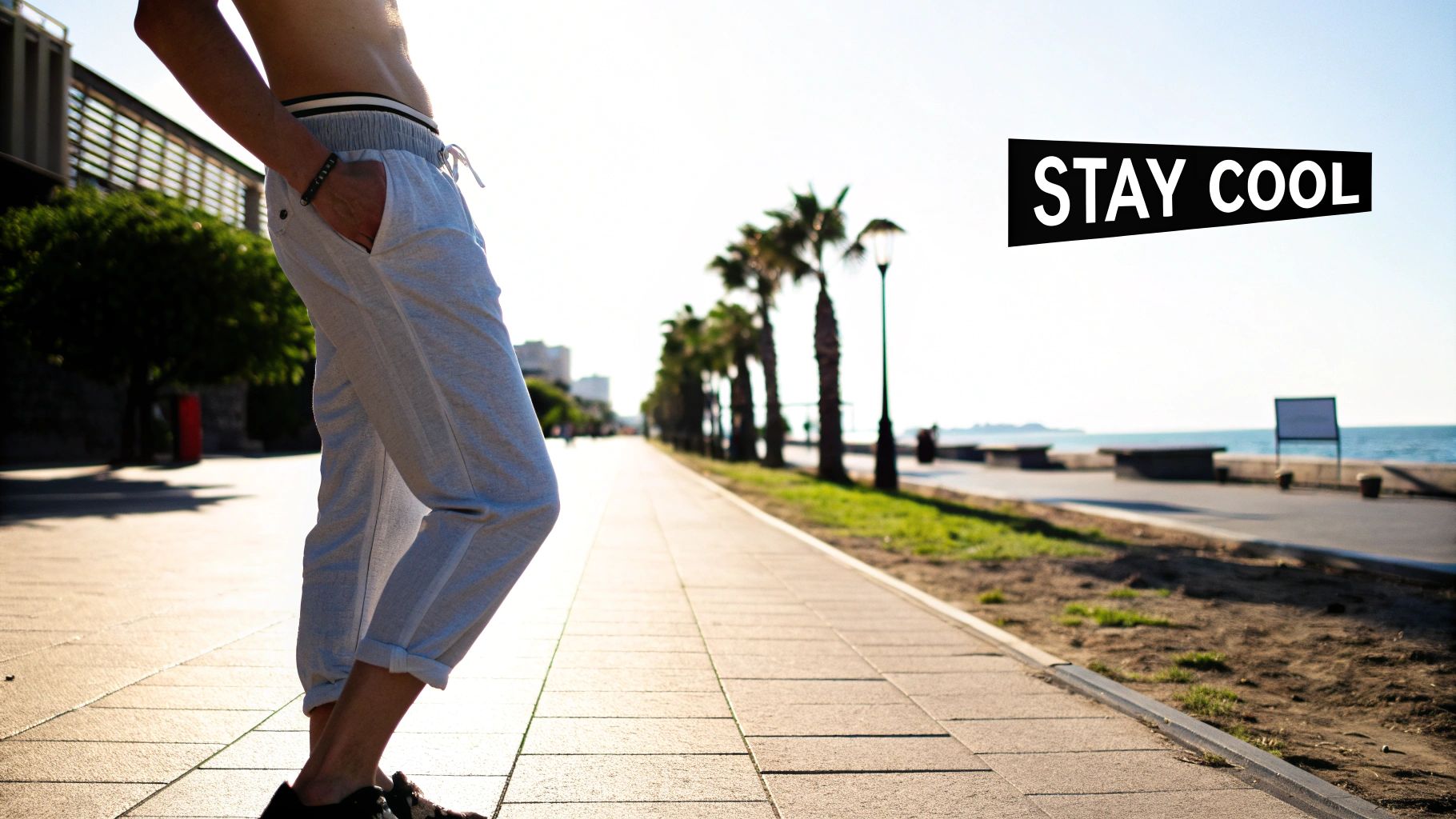
When the mercury climbs, the wrong pair of pants can single-handedly ruin your day. Heavy materials, like your trusty old denim or a thick twill, essentially act as insulation. They trap body heat, block any hint of a breeze, and create a personal heat dome around your legs that leaves you feeling drained and miserable. The answer isn't to just wear less; it's to wear smarter.
Think of this guide as your complete playbook for understanding what actually makes a pair of pants cool and comfortable. We’re going to cut through the marketing noise and get down to the science of how your clothes can work with you, not against you, when the heat is on.
Decoding Breathability
So, what does "breathable" really mean when we're talking about clothes? It’s not just a trendy label. Genuine breathability boils down to three key jobs that the fabric needs to do well:
- Air Permeability: This is just a technical way of saying the fabric lets air pass right through it. Imagine the difference between a screen door and a solid wall—one welcomes the breeze, the other blocks it completely.
- Moisture Vapor Transmission: This one's about how well the material lets your sweat escape as vapor. If it can't get out, it gets trapped, and that's when you start feeling damp and clammy.
- Wicking: This is the fabric's ability to actively pull moisture away from your skin and move it to the outer surface, where it can evaporate much faster.
A truly breathable garment is an all-star in all three categories. It doesn't just let a little air in; it's a complete system designed to manage moisture and keep your body's air conditioning running smoothly.
This guide will walk you through how different fabrics, weaves, and even the cut of your pants play into these functions. Consider it your roadmap to a cooler, more comfortable summer wardrobe, starting with finding that perfect pair of breathable pants for hot weather.
The Science Behind Keeping Cool: What Makes Pants Breathable?
Ever wondered what really separates a pair of perfect summer pants from a sticky, sweat-soaked nightmare? It’s all about how the fabric works with your body, not against it. Think of it this way: heavy denim or thick wool acts like a sealed-up room on a hot day. Heat and humidity get trapped, and you’re left feeling miserable.
On the other hand, the best breathable pants for hot weather are like opening a window and getting a perfect cross-breeze. They’re designed to actively manage heat and moisture. Once you grasp a few key principles, you'll be able to spot truly comfortable pants from a mile away, no matter what the marketing says.
Fabric and Weave: Your First Line of Defense Against Heat
It all starts with the very fibers of the fabric. Natural materials like linen and certain cottons have a natural advantage; their fibers are porous, full of tiny, built-in air channels. It's why they feel so good on a sweltering afternoon. Synthetics have also caught up, with engineered polyester blends designed specifically to shuttle moisture and let air flow, which is why they rule the world of activewear.
But the fiber is only half the battle. How it's woven together is just as important. A tight, dense weave—think of your typical chinos or jeans—is a roadblock for air. A looser weave, like the kind you see in seersucker or simple plain-weave fabrics, creates more space between the threads. This open-air construction is what lets your skin breathe and allows sweat to evaporate before it becomes a problem.
The real goal here is to create a comfortable microclimate right next to your skin. A loose weave is like a superhighway for air, letting heat and moisture make a quick exit.
Moisture-Wicking: The Art of Staying Dry
Airflow is great for feeling cool, but moisture-wicking is what keeps you from feeling damp and clammy. Picture spilling water on a kitchen counter versus a paper towel. A standard cotton t-shirt is like the countertop—it just soaks up sweat and holds onto it, getting heavy and clingy.
Moisture-wicking fabrics are the paper towel. They use a neat little physics trick called capillary action to pull sweat off your skin and spread it across the fabric's outer surface. By spreading it out, the moisture evaporates in a flash. It’s a game-changer in both dry heat and soul-crushing humidity.
How Fit and Cut Turn Up the Cooling Effect
Finally, you can have the most high-tech fabric in the world, but if the pants are skin-tight, it’s not going to do you much good. The garment itself needs a little room to work its magic.
Here's how the cut of your pants can make a huge difference:
- A Relaxed Fit: When you choose a wider or straight-leg cut, you create what's known as a "bellows effect." Every step you take helps pump hot, humid air out while pulling fresh, cooler air in. It’s your own personal ventilation system.
- Smart Ventilation: Look closely at performance-focused pants. You'll often find tiny, laser-cut holes or hidden mesh panels in sweat-prone spots like the inner thighs or the back of the knees. This is targeted airflow, right where you need it most.
This demand for smarter, more comfortable clothing is huge. It's pushed the global athletic pants market to a value of around USD 412.6 billion. That number shows just how much people are prioritizing clothing that actually helps them stay cool and dry. If you're curious, you can explore more insights into the athletic apparel market trends and see what's driving this shift toward performance-based fashion.
Choosing Your Ideal Hot Weather Fabric
Let's get straight to it: picking the right fabric is the most critical move you'll make when buying breathable pants for hot weather. Everything—from airflow and how you handle sweat to sheer comfort and style—boils down to the material. Think of it like this: you wouldn't put slick racing tires on a 4x4 for an off-road trip. The fabric is the tire that meets your skin, and it dictates how you'll perform in the heat.
We're going to look at the main players in the summer fabric game: the old-school natural fibers and the new-school performance synthetics. Each one has its own strengths, making it a better fit for certain situations. Get a handle on these differences, and you'll be well on your way to building a summer wardrobe that actually works.
The Natural Champions: Linen and Lightweight Cotton
Linen is the undisputed king of summer fabrics for a reason. Its fibers are long and hollow, and the fabric has a natural crispness that makes it stand slightly away from your skin. This creates a personal air-conditioning effect, letting air circulate freely. It’s also a sponge for moisture but dries out in a flash, which is a lifesaver in soupy, humid weather. The only "catch"? It wrinkles if you just look at it wrong. But honestly, that’s part of its laid-back, "I just summered in Italy" charm.
If you want something a bit more low-maintenance, lightweight cottons like chambray and seersucker are brilliant alternatives. Seersucker’s famous puckered texture is its secret weapon—it literally lifts the fabric off your body, promoting airflow just like linen. Chambray, on the other hand, looks like a featherlight denim but breathes a thousand times better, offering a softer feel. These cottons strike a fantastic balance between comfort, timeless style, and they won't look like a crumpled napkin after five minutes of sitting down.
So, linen or cotton? It really comes down to your priorities. If you need maximum cooling power for the most scorching days, linen is your guy. For everyday wear that requires a bit more polish and softness, a great lightweight cotton is the perfect call.
The Modern Solution: Performance Synthetics
Natural fibers have been doing the job for centuries, but modern synthetics were engineered from the ground up to solve a very specific problem: sweat. Polyester and spandex blends are the masters of moisture-wicking. They don't just absorb sweat; they actively pull it off your skin and push it to the fabric's surface so it can evaporate, fast.
This makes them a no-brainer for anything active—travel days, a hectic commute, or just being on your feet all day. They also laugh in the face of wrinkles and are tough as nails, which makes them incredibly easy to own. If your day is a mashup of walking, sitting, and running around, a good performance blend will keep you looking sharp and feeling dry from your morning coffee to your evening commute.
This decision-making process can be simplified quite a bit. This chart shows you the path to picking the right material based on what you value most.
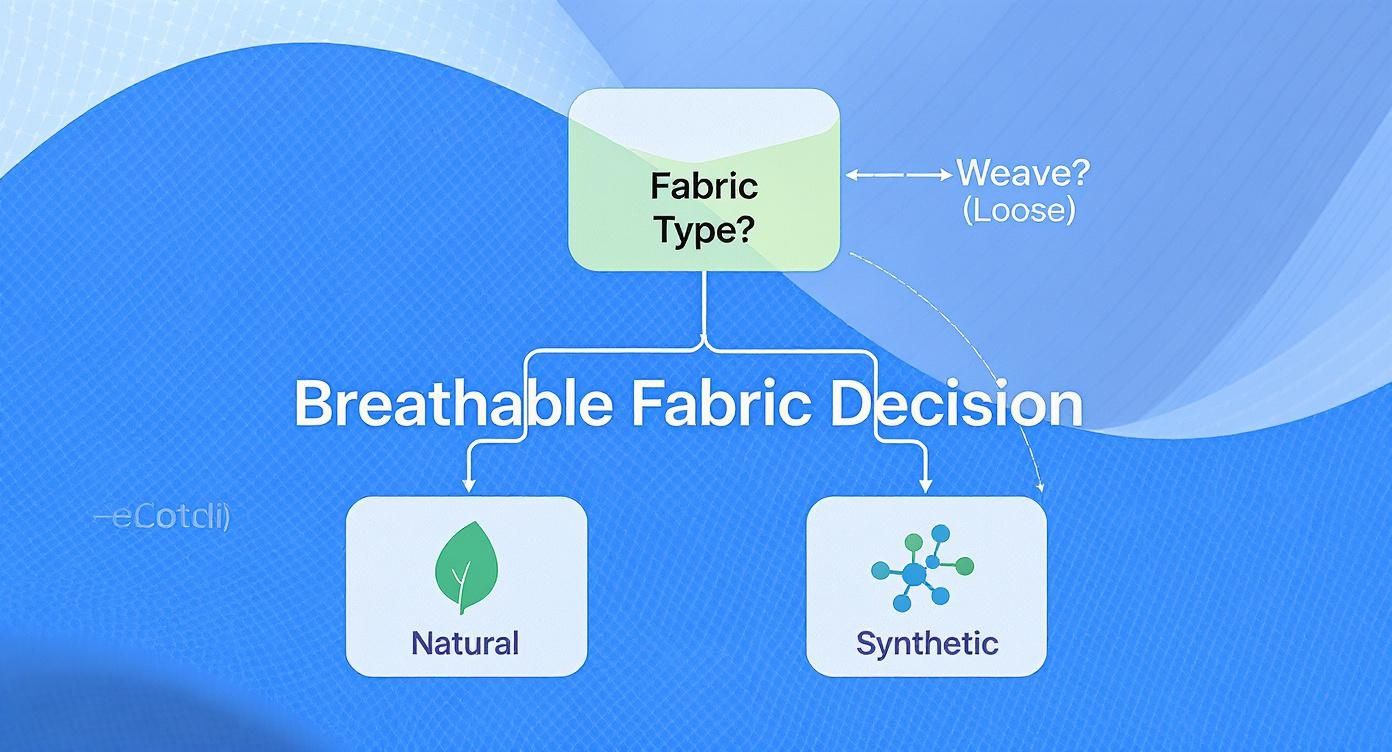
Ultimately, your choice begins with a simple question: natural or synthetic? From there, it's all about how that material is put together to let the air in.
To make things even clearer, I've put together a quick comparison of the top contenders.
Hot Weather Fabric Comparison Guide
This table breaks down the pros and cons of each fabric type at a glance, helping you match the material to your needs.
| Fabric | Breathability | Moisture-Wicking | Wrinkle Resistance | Best For |
|---|---|---|---|---|
| Linen | Excellent | Good | Low | Extreme heat, beach vacations, relaxed settings |
| Lightweight Cotton | Good | Moderate | Moderate | Everyday wear, casual Fridays, smart-casual looks |
| Seersucker | Excellent | Moderate | High | Humid climates, garden parties, looking sharp without trying |
| Performance Synthetics | Very Good | Excellent | High | Travel, commuting, active days, a polished tech look |
Choosing the right fabric isn’t about finding a single "best" option, but the best option for the occasion. A well-rounded wardrobe will probably have a mix of these to cover all your bases.
Why the Right Fit is Your Secret Weapon for Airflow
Let's be honest, you can have pants made from the most miraculous, space-age fabric on the planet, but if they’re plastered to your skin, you’re still going to feel like you’re walking around in a sauna. The fabric is only half the battle. The fit is what actually lets it do its job.
Think of it this way: a powerful fan is useless if it's pushed right up against a wall. It needs space to pull air in and push it out. The silhouette of your pants is that space—it's the system that gets hot, sticky air moving away from your body.
A common mistake is thinking you have to wear massively oversized, baggy pants to stay cool. Not at all. The magic isn't in sheer volume, but in strategic roominess. Even a small amount of space between the fabric and your skin creates a channel for air to circulate, which is the key to avoiding that swampy, trapped-in feeling.
This is where the cut of your breathable pants for hot weather really shines. A wider or straight-leg silhouette creates a natural "bellows effect." Seriously. Every step you take acts like a pump, pushing warm, humid air out of the pant legs and pulling in fresh, cooler air. It’s like having your own personal, motion-activated air conditioning system.
Finding Your Perfect Cooling Silhouette
The real goal here is to strike that perfect balance between maximum airflow and a style that actually looks good on you. Skin-tight pants are your worst enemy in the summer. They hold the fabric right against your skin, giving air nowhere to go and making it nearly impossible for sweat to evaporate properly.
Here’s a quick guide to how different fits stack up when the temperature rises:
- Relaxed or Wide-Leg: These are the undisputed champions of airflow. They create the most powerful bellows effect and keep the fabric from clinging, offering nonstop comfort and relief.
- Straight-Leg: A classic for a reason. This fit is a fantastic middle-ground, giving you enough room for air to move freely without looking or feeling too loose. It's incredibly versatile.
- Athletic Taper: Built for guys who move. These pants give you plenty of room up top in the seat and thighs—where you need it most for airflow—before tapering down the leg. It’s the perfect blend of breathability and a clean silhouette.
The most important thing to remember is this: any fit that lets the fabric hang and move away from your skin is going to keep you cooler. An inch of space can make all the difference in the world.
This Isn't Just a Trend, It's a Movement
This shift toward smarter, more functional clothing is way bigger than just a seasonal fad. People are tired of clothes that fight against them, especially in the heat. They're demanding apparel that actually performs.
The numbers back this up. The market for sweat-resistant apparel, which is all about performance fabrics like those in breathable pants, was recently valued at a massive USD 226.1 billion. And it's not slowing down; it's projected to hit USD 358 billion by 2035.
While performance shirts get a lot of attention, pants are a huge—and rapidly growing—part of this market. It just goes to show how essential a comfortable, breathable pair of pants is for work, travel, and just getting through the day in warmer climates. If you're curious, you can explore a detailed breakdown of the sweat-resistant apparel market to see the data for yourself. Choosing your pants based on airflow isn't just a style choice; it's part of a major shift toward building smarter, more comfortable wardrobes.
Putting It All Together with ModaMuse
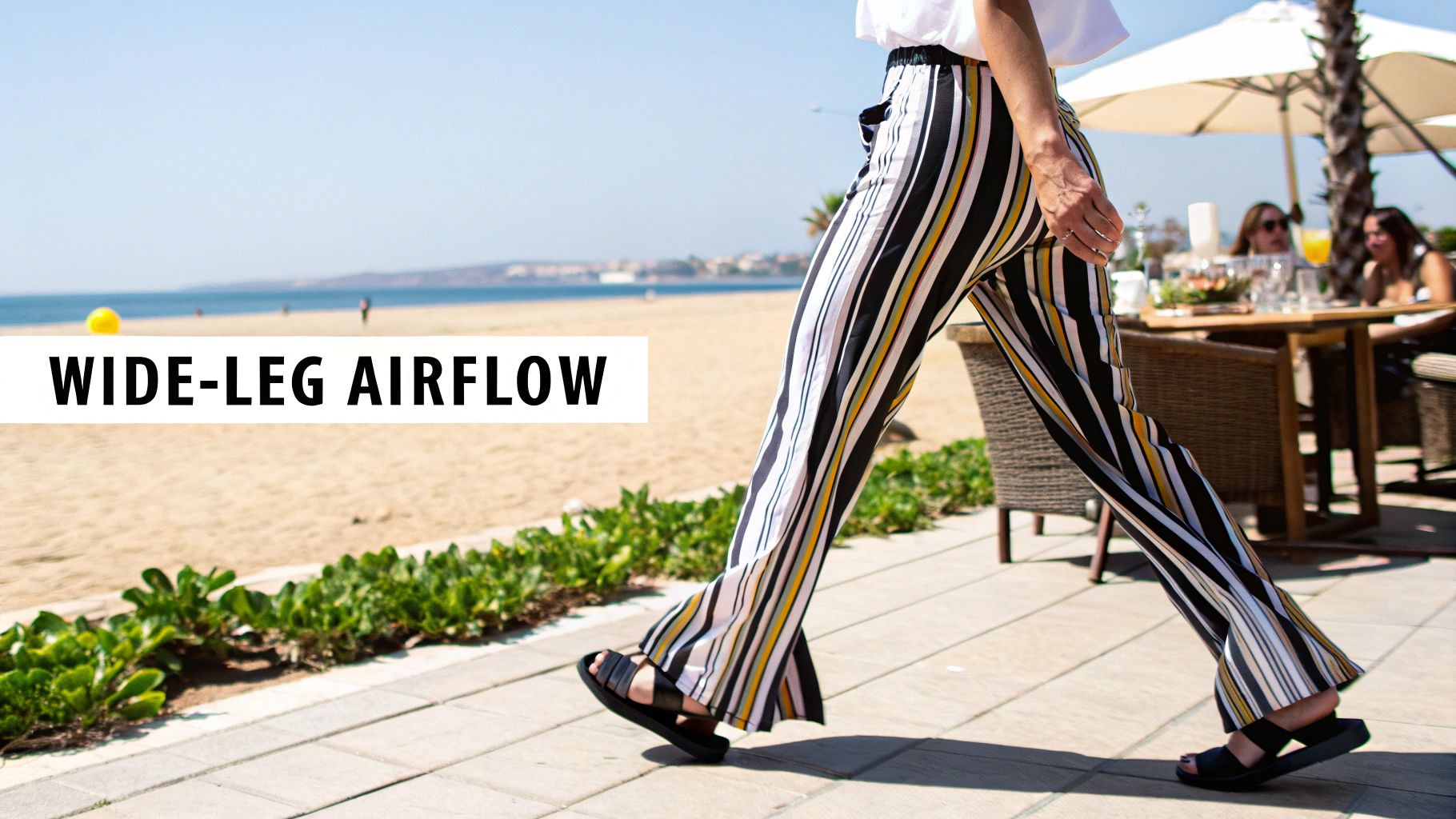
Okay, so we've talked a lot about the theory—fabric weaves, fit, and airflow. But what does all that look like in practice? Let's take the ModaMuse Men's Wide-Leg Striped Pants and see how they nail every single one of these principles.
This isn't just about a pair of stylish pants; it’s a masterclass in how to engineer clothing for genuine comfort when the temperature soars.
It all starts with the fabric. ModaMuse chose a modern polyester-spandex blend, a smart move for beating the heat. Forget about heavy, swampy cotton that holds onto sweat. This blend is incredibly lightweight and built to manage moisture. It actively wicks perspiration away from your skin so it can evaporate, keeping you feeling dry and fresh whether you're navigating a sun-baked city street or catching a breeze on the boardwalk.
This kind of material innovation is exactly what people are looking for. The global market for waterproof breathable textiles was recently valued at around USD 2.03 billion and is expected to hit USD 2.86 billion within six years. That’s a massive jump, and it shows just how much we all crave clothes that work for us. You can dig into the numbers yourself and explore the growth of performance textile technology.
The Power of a Perfect Fit
But a great fabric is only half the battle. The real magic of the ModaMuse pants lies in their silhouette. The wide-leg cut is a brilliant, real-world application of the ‘bellows effect’ we covered earlier.
Think of it this way: with every step you take, the extra space between the fabric and your skin creates a subtle pump. It pushes out warm, stale air and pulls in cooler, fresh air. It’s like having your own built-in, personal ventilation system.
This generous fit means you never feel constricted or sticky, even on the most brutally humid days. The design and the material work in tandem—the cut maximizes the fabric’s breathable potential, creating a one-two punch against the heat.
Style That Breathes
And let's be honest, none of this matters if the pants don't look good. The versatile striped design proves you never have to choose between comfort and style.
It's a classic look that’s incredibly easy to wear. Throw them on with a crisp linen shirt for a nice dinner, or pair them with a simple tee for a laid-back weekend brunch. They just work.
The ModaMuse Men's Wide-Leg Striped Pants are a perfect example of what happens when thoughtful design meets smart fabric science. They hit every mark for what makes the best breathable pants for hot weather, making them an essential piece for anyone looking to stay cool without compromising on style.
Common Questions About Breathable Pants
Alright, you've got the basics down on fabrics and fits, but a few questions always seem to come up when you're on the hunt for the perfect breathable pants for hot weather. Let's clear up those last-minute doubts so you can build a summer wardrobe that actually works.
We'll tackle the common debates and practical worries head-on. Getting these details right is what separates a good pair of pants from a great one—the kind you'll reach for all season long.
Is Linen Really Better Than Cotton for Hot Weather?
This is the classic summer fabric showdown. And generally, yes, linen is the superior choice for extreme heat. Its natural, hollow fibers and crisp texture create tiny pockets of space between the fabric and your skin, letting air flow like nothing else. Linen also dries incredibly fast, which is a lifesaver in humid weather.
That said, high-quality, lightweight cottons—think seersucker or a fine chambray—are fantastic alternatives. They're often much softer right off the rack and aren't nearly as prone to the intense wrinkling that linen is famous for.
Here’s the bottom line:
- For maximum cooling power in blistering heat, linen is your undisputed champion.
- For a balance of everyday comfort, softness, and a more polished look, a premium lightweight cotton is an excellent choice.
Can I Wear Breathable Pants in a Professional Setting?
Absolutely. The old notion that summer office wear has to be stiff and stuffy is completely outdated. The trick is simply choosing the right style and material to look sharp while staying comfortable.
Look for tailored trousers or well-cut chinos made from sophisticated, breathable fabrics. Linen blends, which mix linen with cotton or synthetics to tame the wrinkles, are a perfect pick. Another stellar option is tropical wool—a very lightweight, open-weave wool that breathes exceptionally well and drapes beautifully.
Stick to classic, versatile colors like navy, charcoal, or khaki. Pair these smart pants with a crisp button-down and good shoes, and you'll project a polished, professional image, even after a sweltering commute.
How Should I Care for My Breathable Pants?
Don't sabotage your investment with the wrong laundry routine! Proper care is crucial for keeping your hot-weather pants performing at their best. Harsh washing can clog the very fibers you're counting on to keep you cool.
Following the care label is always your best bet, but here are some general rules of thumb that will keep your garments in top shape:
- Natural Fibers (Linen & Cotton): Go for a gentle cycle with cold water. This helps prevent shrinking and keeps wrinkling to a minimum. Always hang them to air dry if you can, or use the lowest heat setting on your dryer.
- Performance Synthetics: Again, cold water is key. More importantly, you must skip the fabric softener. It leaves a waxy residue that clogs the fabric's microscopic pores, completely ruining its ability to wick moisture.
Will Dark-Colored Pants Actually Make Me Hotter?
We’ve all heard it: don't wear black in the summer. While it's true that dark colors absorb more sunlight, the fabric's breathability and the garment's fit are far more important factors in keeping you cool.
Think about it this way: a pair of loose-fitting, black linen trousers will feel worlds cooler than tight, white denim jeans. The linen allows for constant airflow, whisking heat and sweat away, while the restrictive denim just traps it against your skin.
When you prioritize a highly breathable material and a relaxed fit that creates that all-important "bellows effect" as you walk, you can absolutely wear darker shades like black, navy, or charcoal without overheating.
Ready to experience the perfect blend of style and cooling technology? The ModaMuse Men's Wide-Leg Striped Pants are engineered with a lightweight fabric and an airflow-maximizing fit, making them your ultimate solution for staying comfortable in the heat. Upgrade your summer wardrobe and conquer the heat in style today.
